RRFB Trail Crossing Field Notes
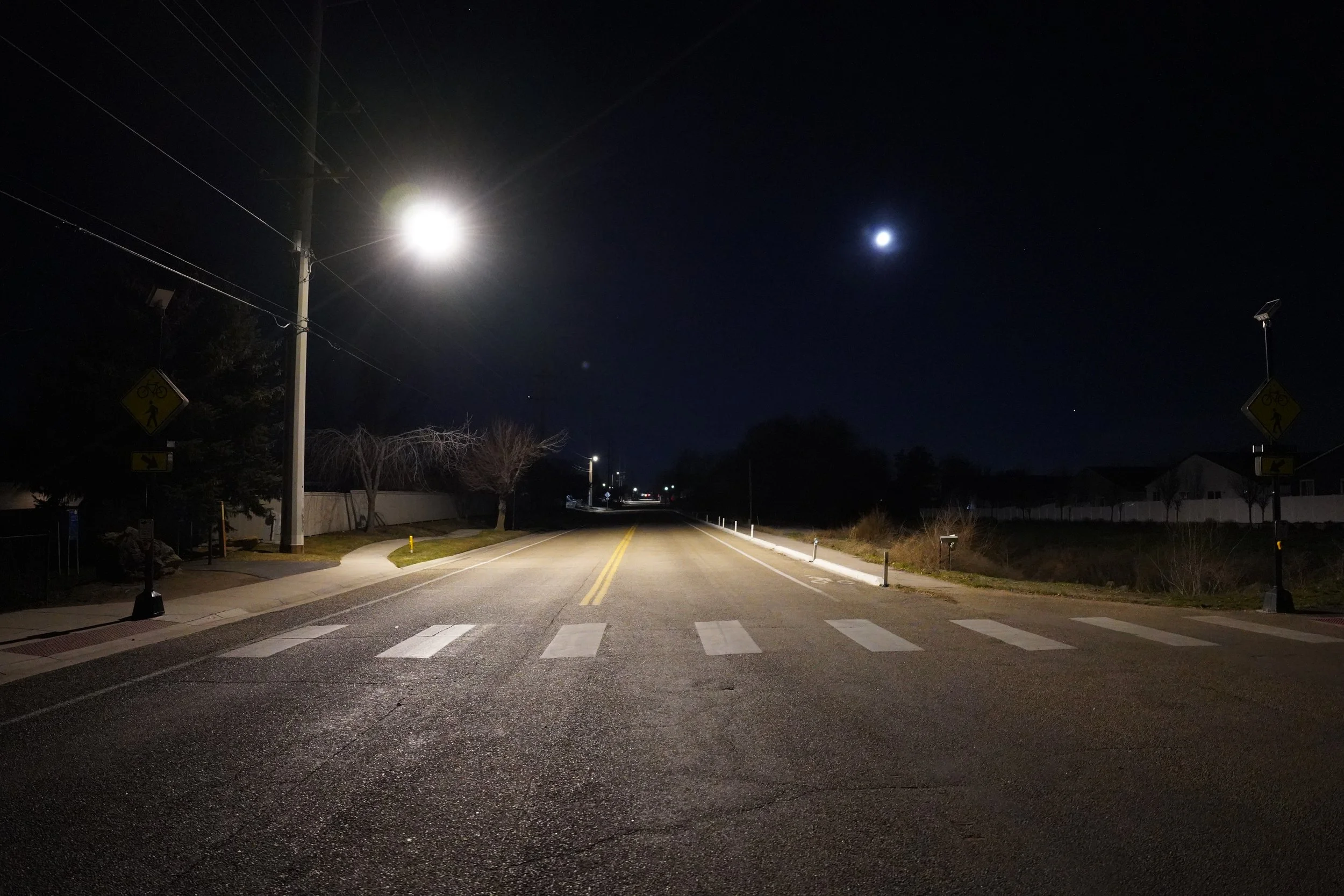
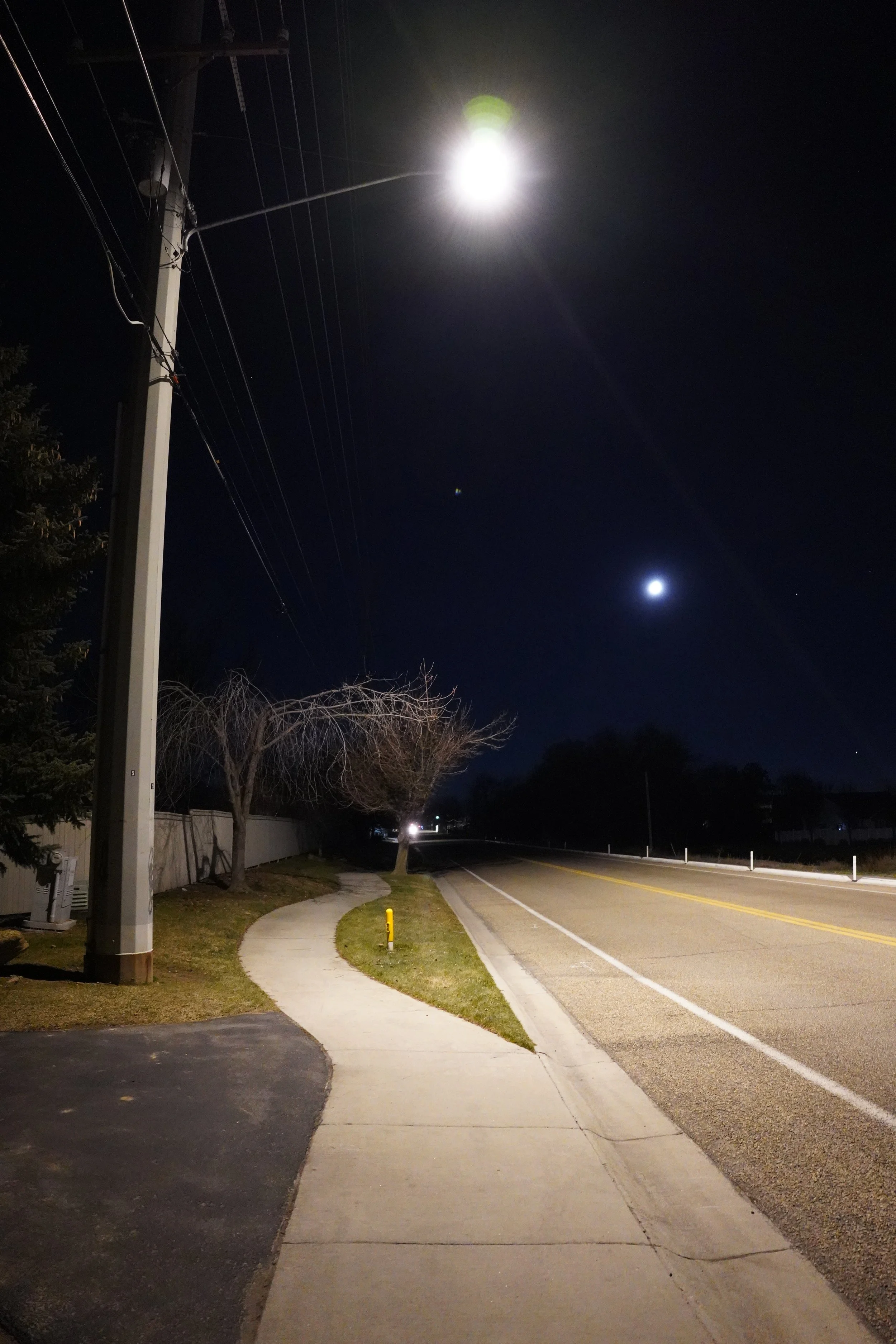
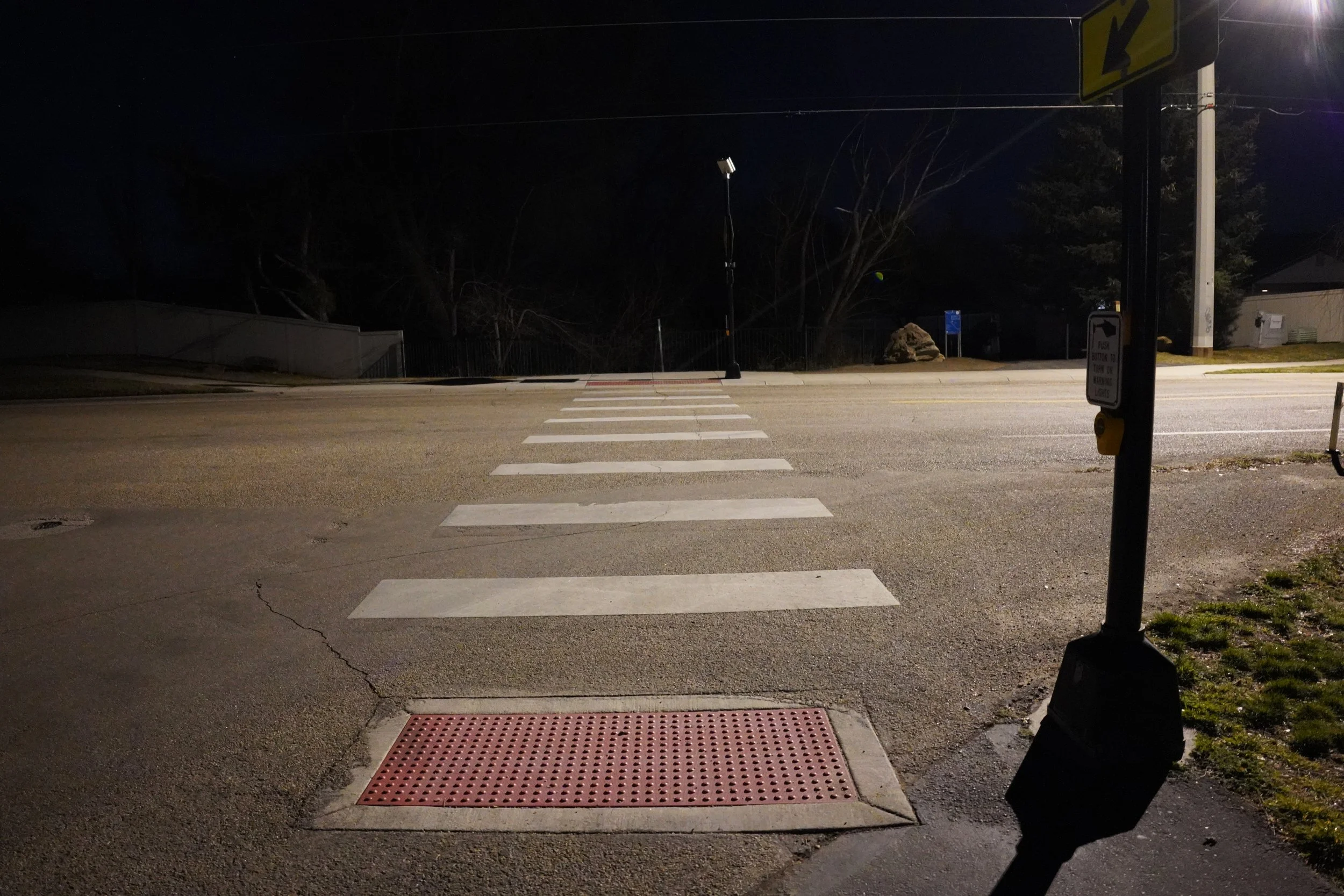
Trail Crossing at night with RRFB countermeasure implemented and utility mounted light installed 43ft from crosswalk (nearest pole).
What I Observed
The RRFB was highly effective at attracting attention. The flashing beacons were visible from a considerable distance and clearly communicated that a pedestrian crossing was present.
The lighting told a different story.
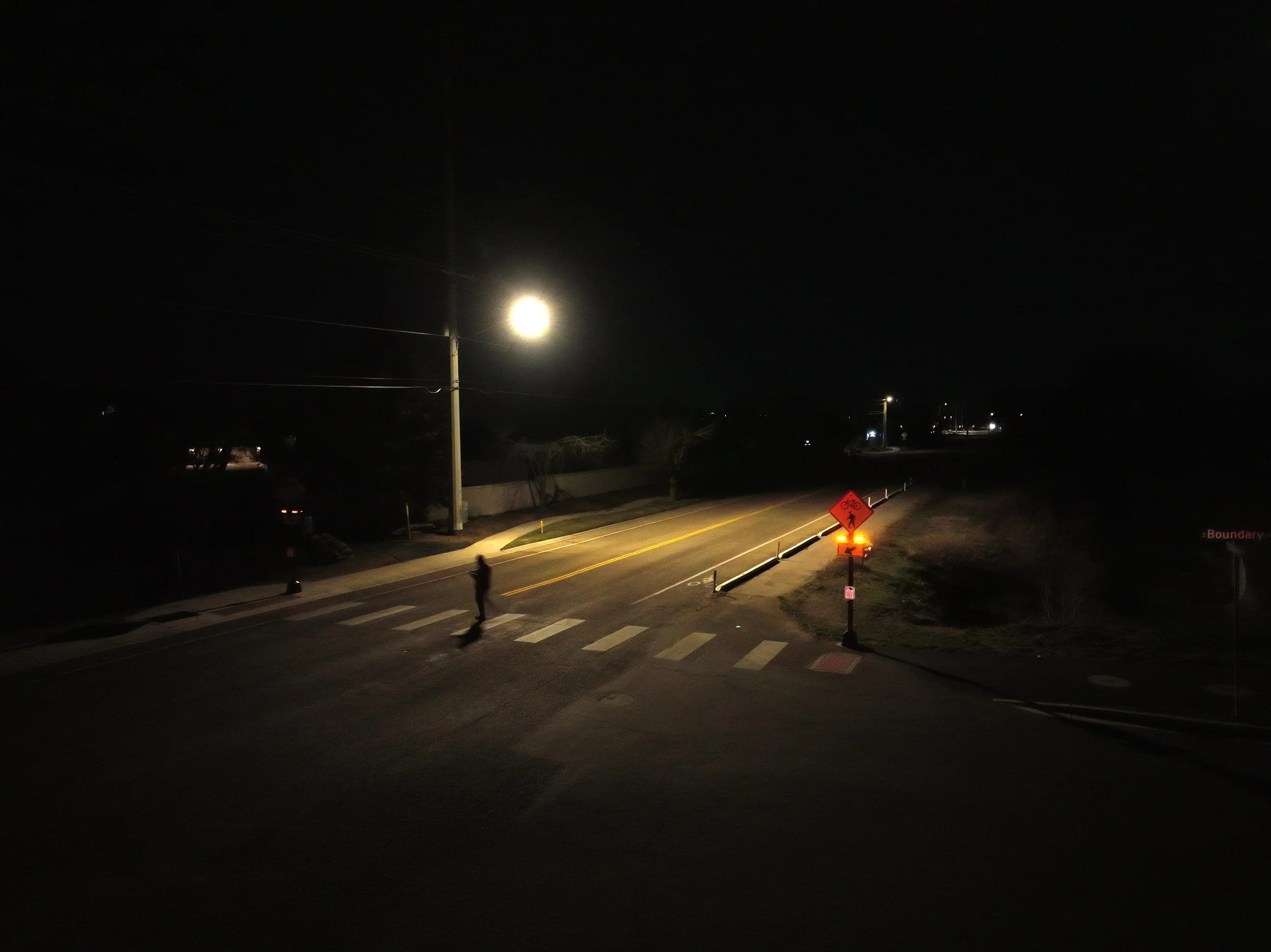
Pedestrians were easy to see when standing directly beneath the primary luminaire, but visibility became less consistent as they moved through the crossing. Recognition varied depending on where the pedestrian was located and the direction from which a driver approached.
An Interesting Observation
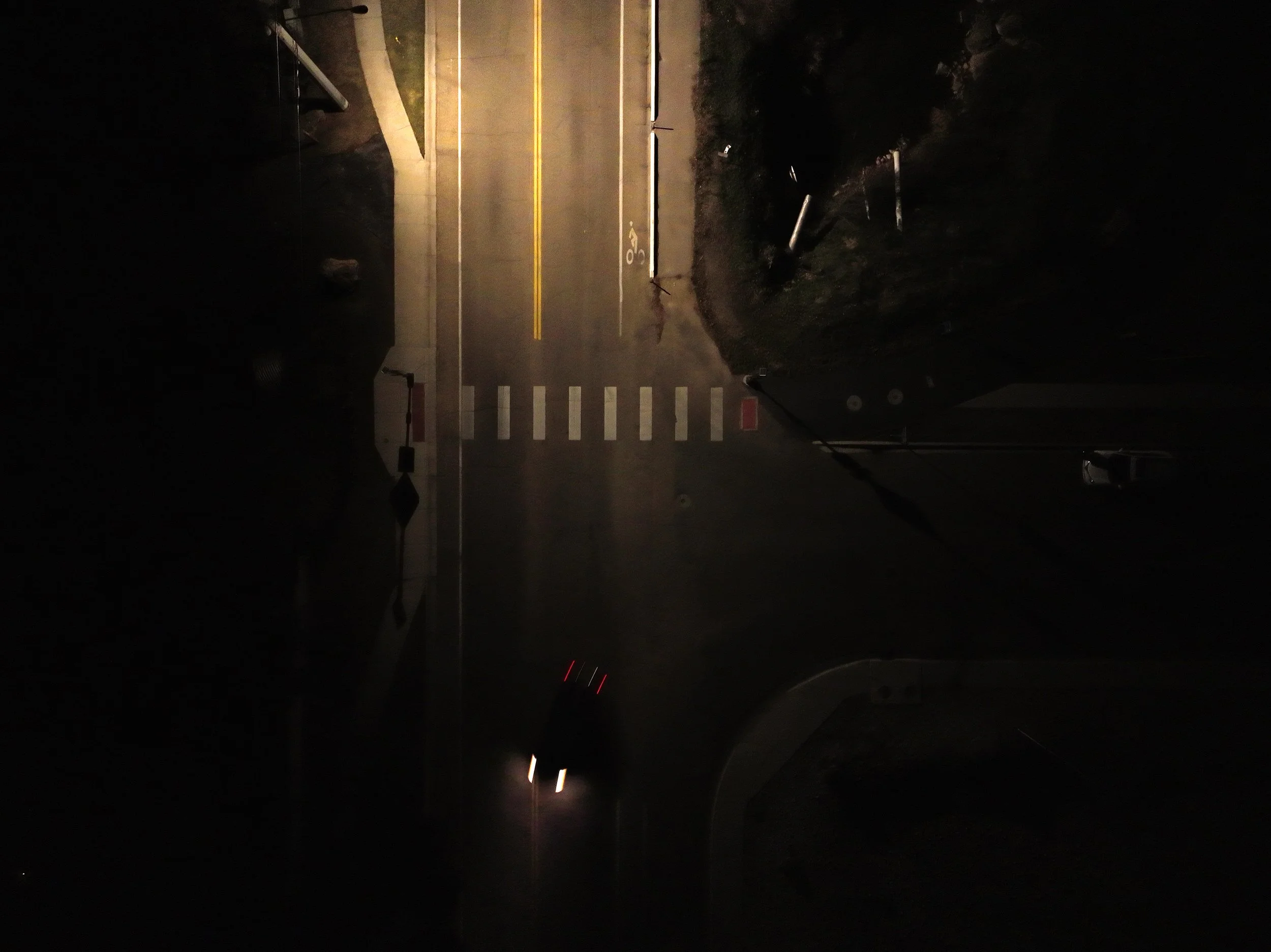
All of the illumination was coming from one side of the crosswalk.
As a result, pedestrians were illuminated unevenly throughout the crossing. Depending on position, a pedestrian could appear somewhat lit from one approach while appearing much less and more as a silhouette from another.
The pavement remained visible, but the pedestrian was not always emphasized to the same degree. I observed that visibility of the pedestrian from that side was even more not ideal when a vehicles headlights were visible from the opposite direction.
This serves as a reminder that lighting a crosswalk and lighting a pedestrian are not necessarily the same design objective.
While the utility mounted light was clearly intentional to help light the crosswalk, it is a reminder that integrating lighting with traffic design is always the better approach.
Questions Worth Exploring
Should RRFB installations include greater emphasis on pedestrian-focused lighting?
Are current lighting designs placing too much attention on pavement illumination and not enough on facial recognition?
How should agencies evaluate crossing performance when RRFBs are inactive?
Can balanced vertical illumination improve the effectiveness of existing RRFB installations?
Key Takeaway
This crossing demonstrates the difference between attracting attention and supporting recognition. The RRFB successfully alerts drivers that a crossing is present, but the lighting plays a significant role in determining how consistently pedestrians can be seen throughout the crossing.
The most valuable lesson from this site is that warning devices and lighting should be viewed as complementary systems. One helps drivers look toward the crossing. The other helps them see who is there.
Why It Matters
Transportation professionals often discuss crossing treatments in terms of control devices, signs, and markings. This site highlighted the importance of separating two different functions:
Attention and recognition.
The RRFB successfully captured driver attention.
The lighting was responsible for helping drivers recognize a person within the crossing.
Those are related goals, but they are not the same thing.