Pedestrian Hybrid Beacon
Field Notes
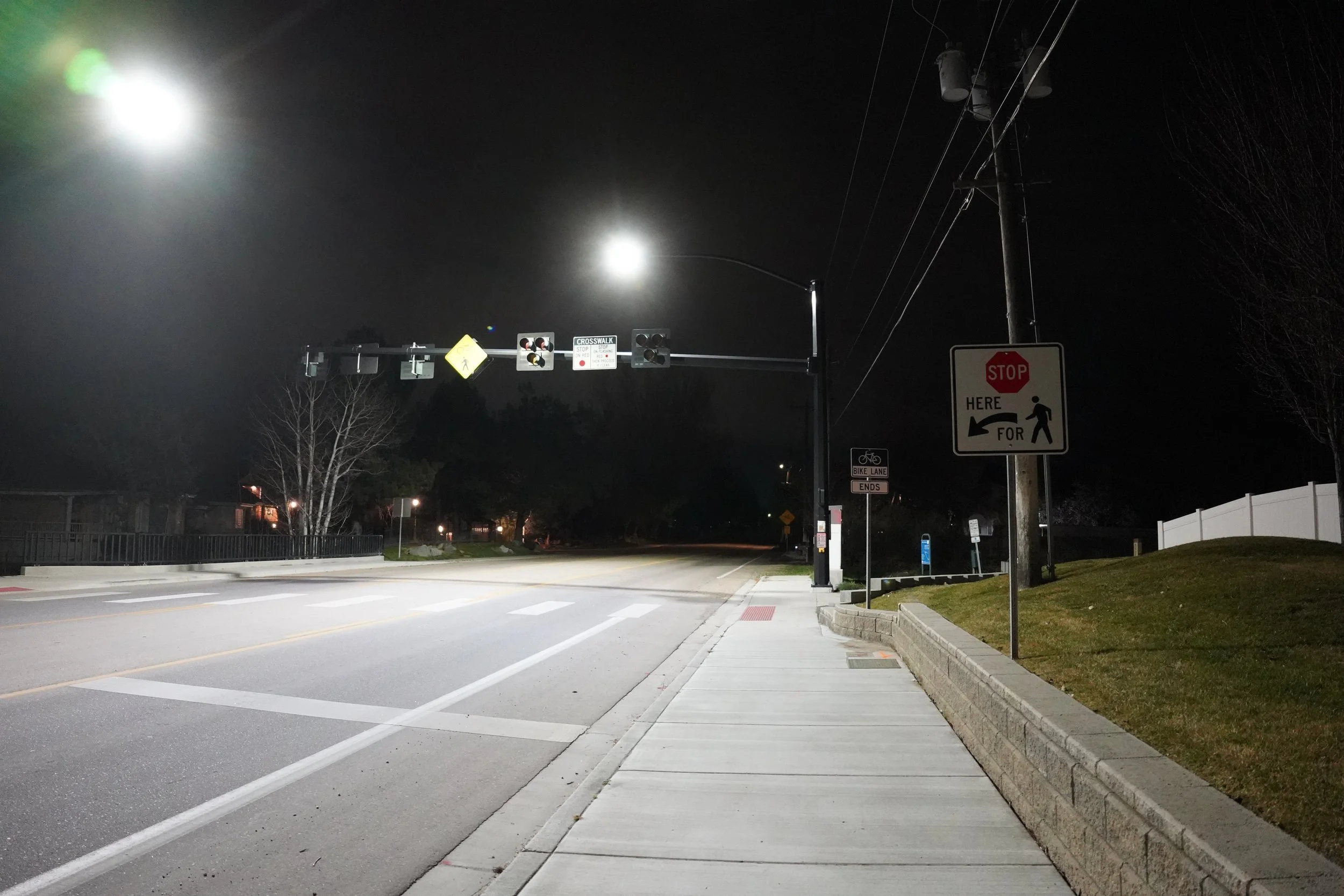
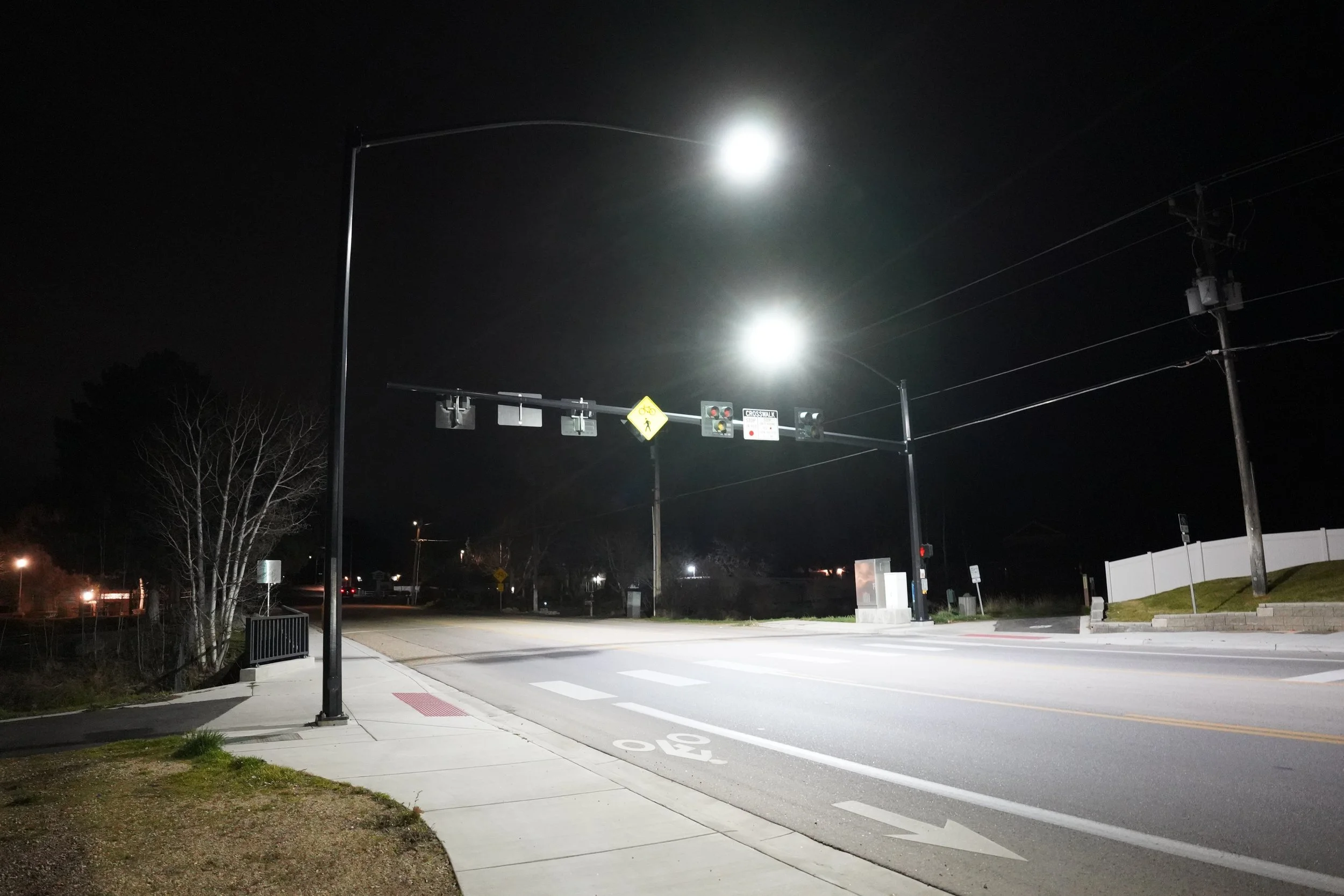
Intentionally lit PHB treatment on a collector, skewed crosswalk and illumination from both angles.
Behavior that Stood Out
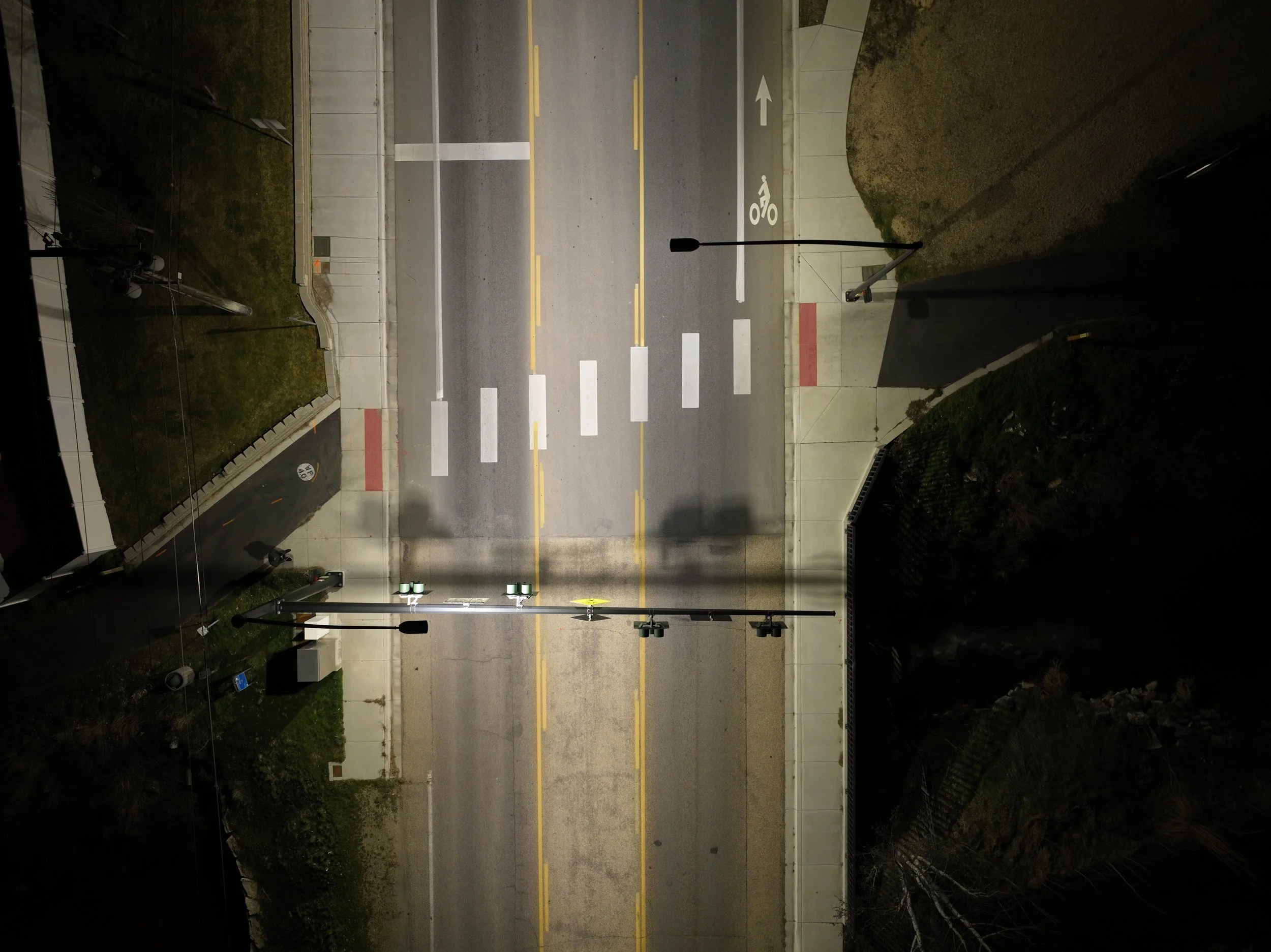
Pedestrian behavior revealed something that in day-to-day design may be missed, and this is where human factors kicks in. The crosswalk alignment did not perfectly match the natural path users would take, as it appeared I was naturally inclined to drift outside the marked crossing on the east side of the crossing, per video below. Understandably, if I were coming directly from the trail, it may have been different. But maybe something about the skewed crosswalk influenced a jagged behavior, as this was not done intentionally and happened on multiple occasions.
This wasn't a signal issue or a lighting issue, but more the “feeling” of the geometry.
Sometimes the most valuable lesson from a field visit is discovering that human behavior is responding to the physical layout rather than the control devices.
Why the Layers Mattered
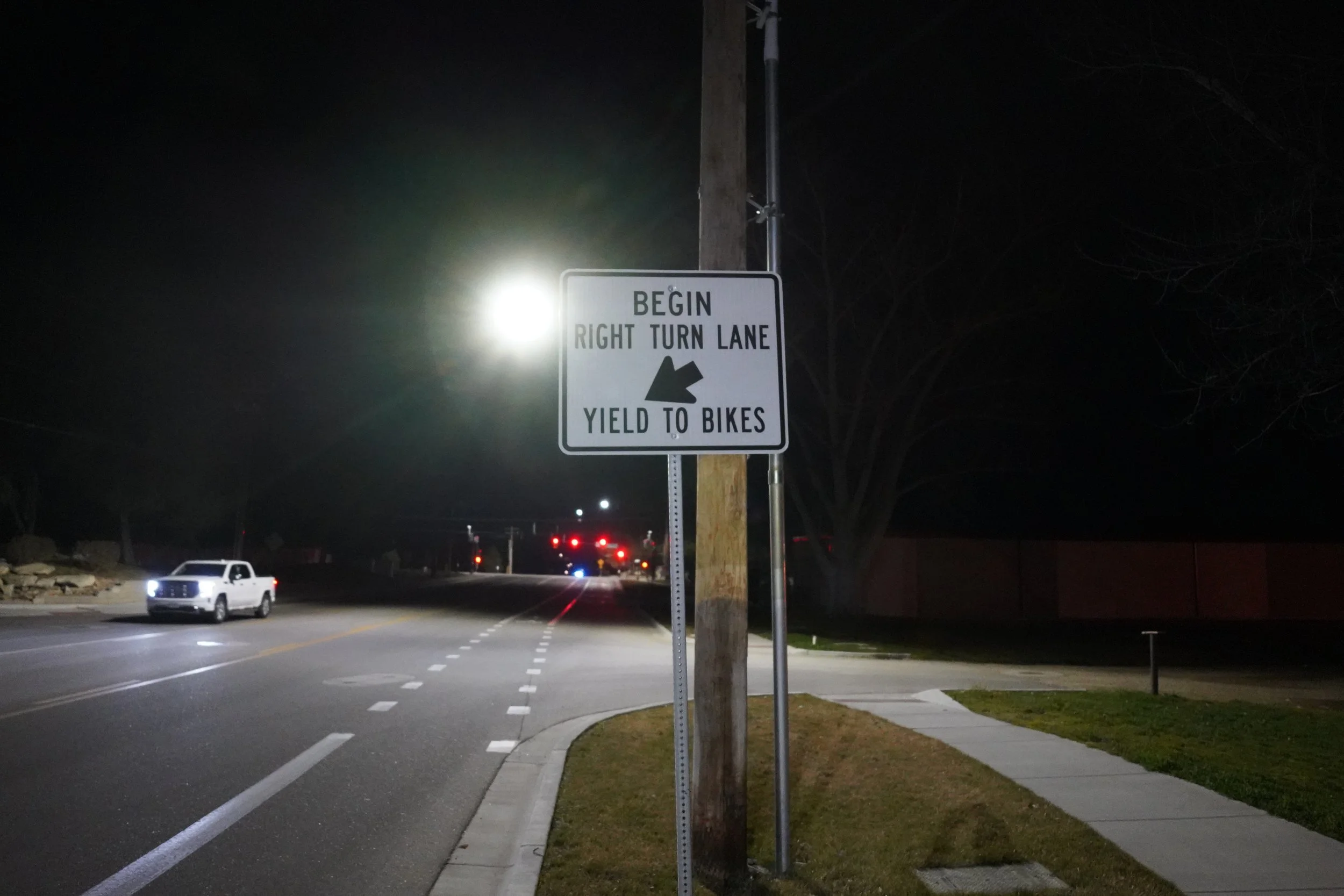
Too often, discussions about pedestrian safety focus on a single treatment. This location demonstrates the value of layered design.
The beacon attracts attention.
The lighting supports recognition.
The signing reinforces driver expectations.
The pavement markings provide guidance.
No single element carries the entire burden of safety, but more importantly, lighting is not the forgotten element.
Questions Worth Exploring
Should crosswalk alignment be adjusted to better match pedestrian natural path?
How much does geometry influence application compared to signing or signal treatments?
Can observing nighttime conditions help reveal behavioral patterns that are less obvious during the day?
At what threshold should optical shielding be considered in a neighborhood context to prevent lighting neighboring properties?
Key Takeaway
This crossing is a strong example of how multiple safety treatments can work together to support nighttime pedestrian visibility. The biggest opportunities for improvement are not always related to illumination levels, but also how the crossing geometry influences user behavior.
What I Observed
The crossing performed pretty well from a visibility standpoint. Pedestrians were clearly recognizable before entering the roadway, and illumination across the crosswalk was both bright and fairly uniform. The combination of lighting, signing, pavement markings, and the beacon created a strong visual presence for approaching drivers.
One detail that stood out was the use of multiple luminaires working together. Rather than a single luminaire, and lighting extended beyond the crossing in the right areas, helping maintain visibility throughout the entire crossing experience.