“Dogbone” or “Peanut” Roundabout Lighting
About This Intersection
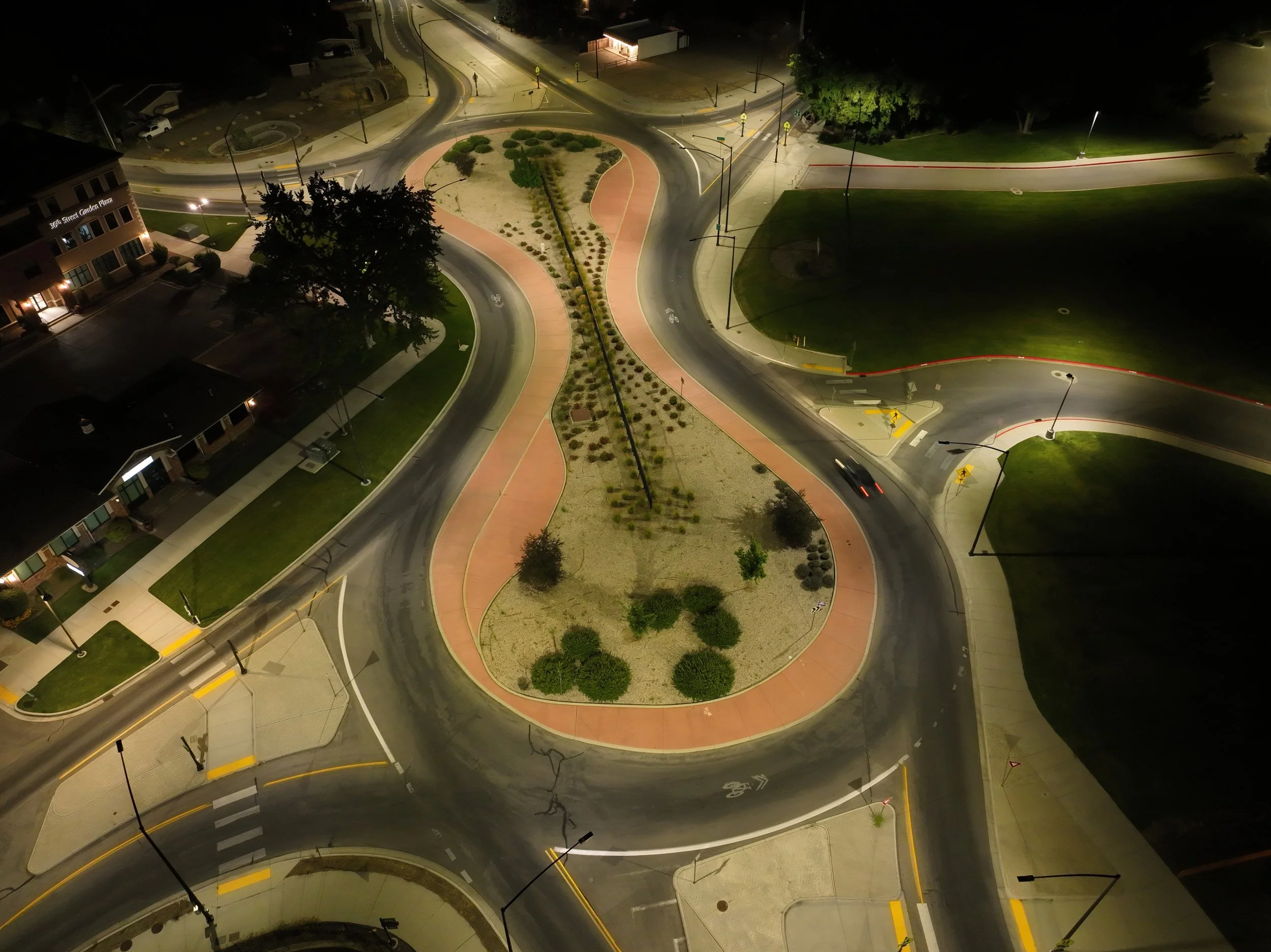
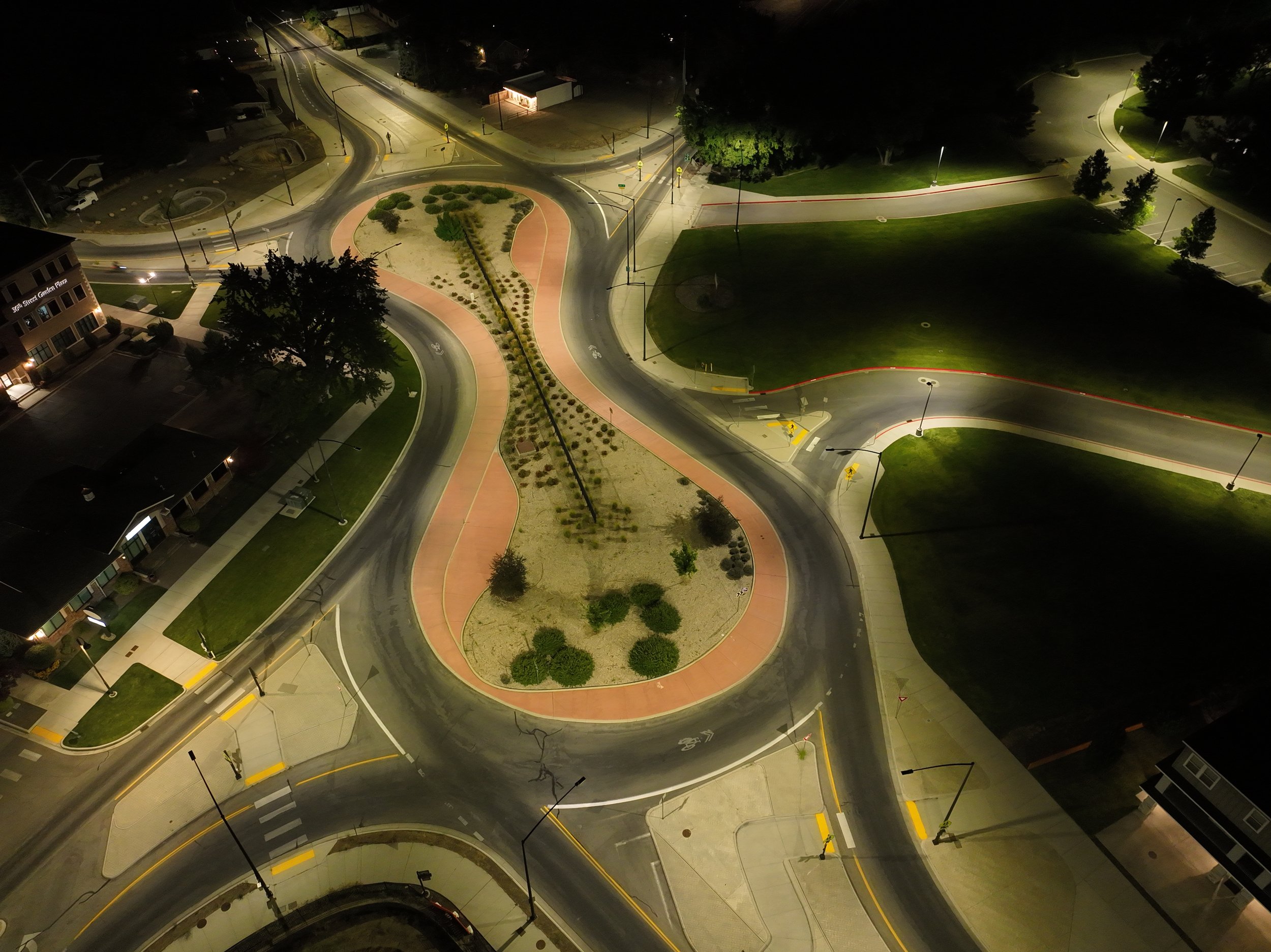
Unlike a conventional single-lane or multilane roundabout, this intersection consists of two interconnected roundabouts joined by a short central roadway, creating what is commonly referred to as a dogbone or peanut roundabout.
This unique configuration manages traffic at closely spaced intersections while reducing conflict points and maintaining low vehicle speeds. Because of its geometry, lighting plays an especially important role in helping drivers understand the roadway layout before they enter the intersection.
Overall Assessment
Rather than relying on excessive light output, the design appears to prioritize visual guidance. The lighting establishes a comfortable nighttime environment that naturally directs driver attention through the intersection while maintaining good visibility for pedestrians and cyclists.
The overall impression is balanced, intuitive, and appropriately scaled for the surrounding environment.
Several aspects contributed to this positive performance:
clear roadway definition
consistent lighting uniformity
minimal glare
strong visual hierarchy
comfortable pedestrian environment
good recognition of the intersection from every approach
Lighting Performance
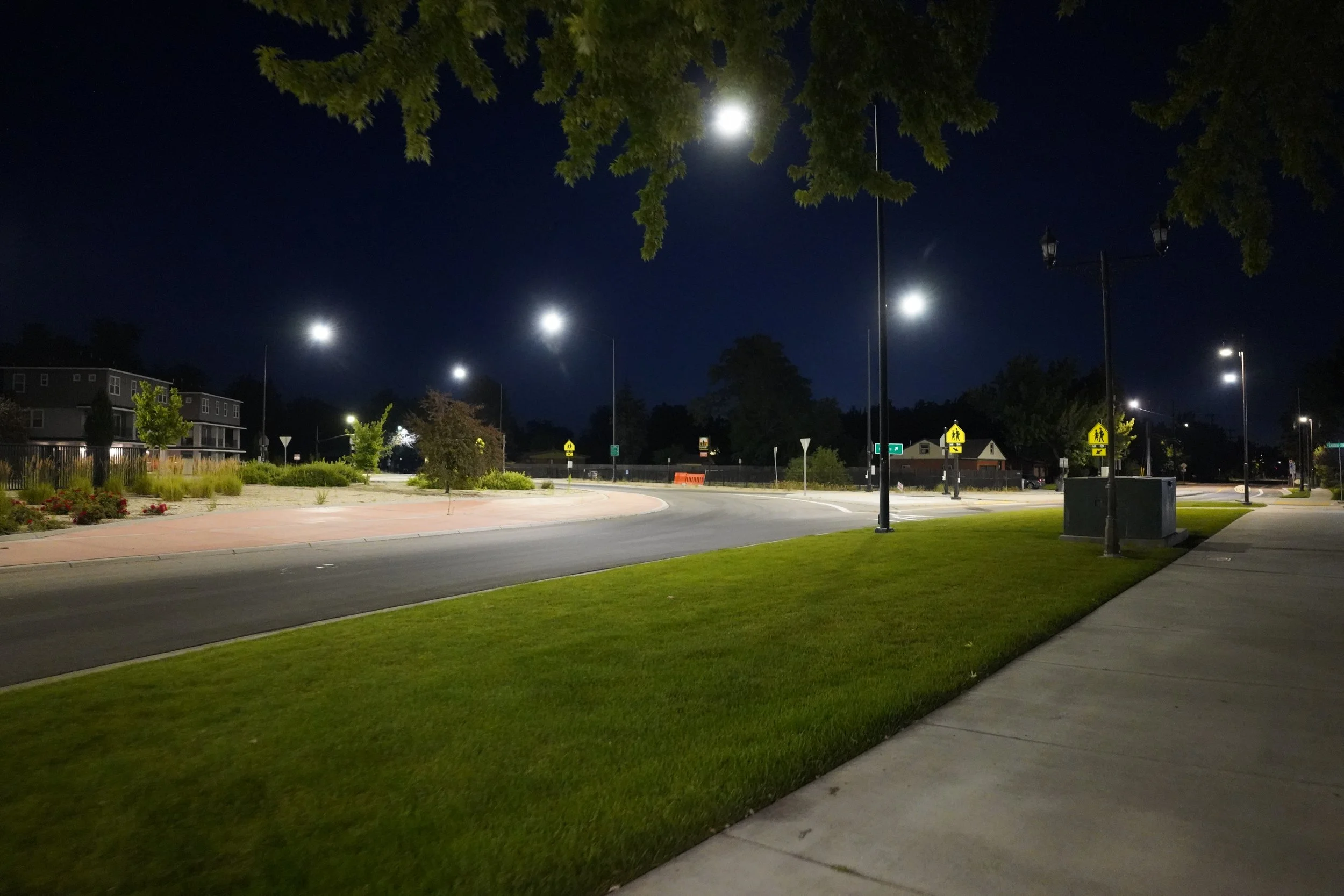
One of the most interesting aspects of this installation is that it does not appear to rely on particularly high-output luminaires.
Instead, the performance seems to result from thoughtful application of four design principles:
fixture placement
optical distribution
lighting uniformity
visual contrast
Rather than creating isolated bright areas, the lighting establishes a continuous visual path through the entire dogbone geometry.
This allows the roadway itself to become the primary visual feature.
Pedestrian Environment
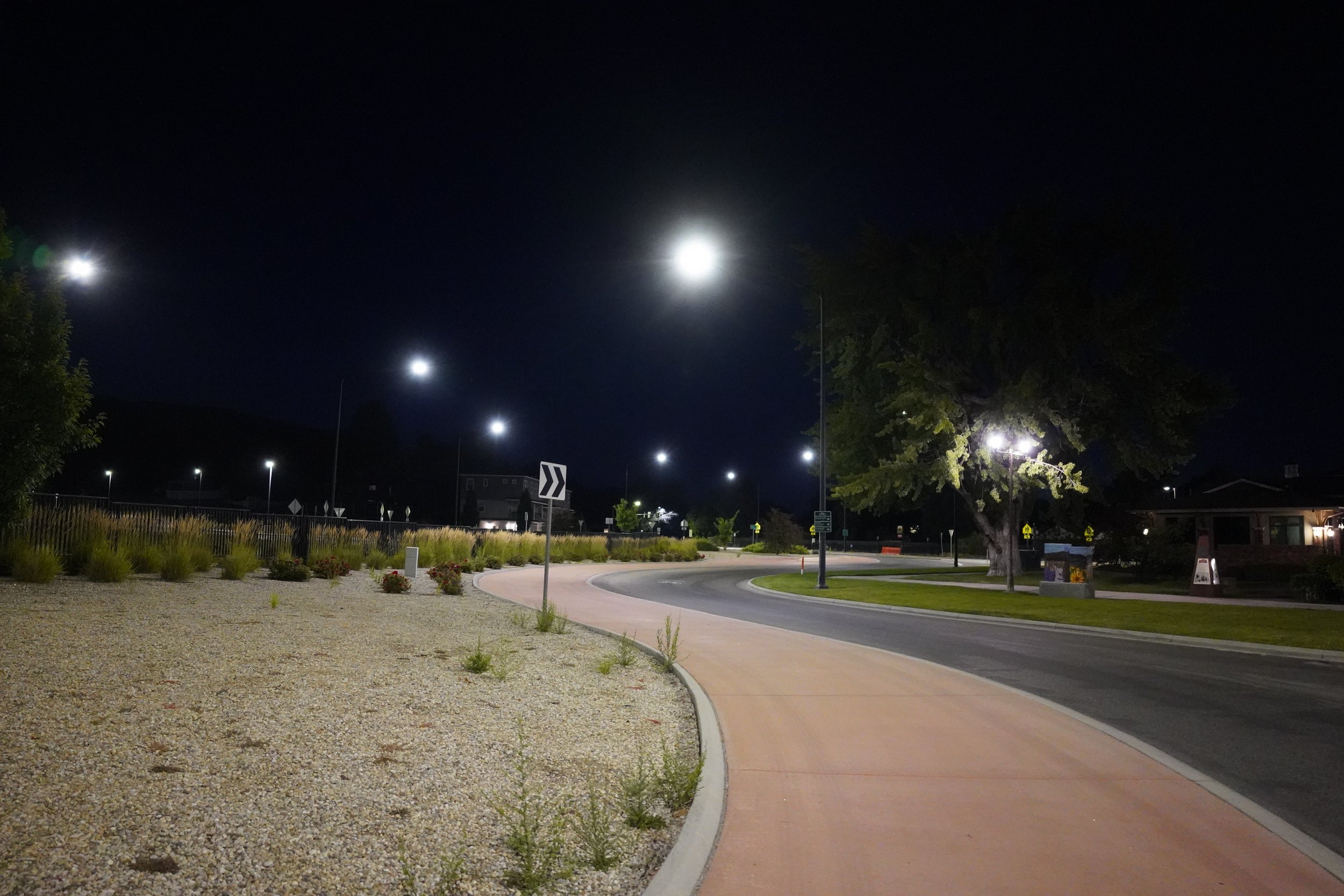
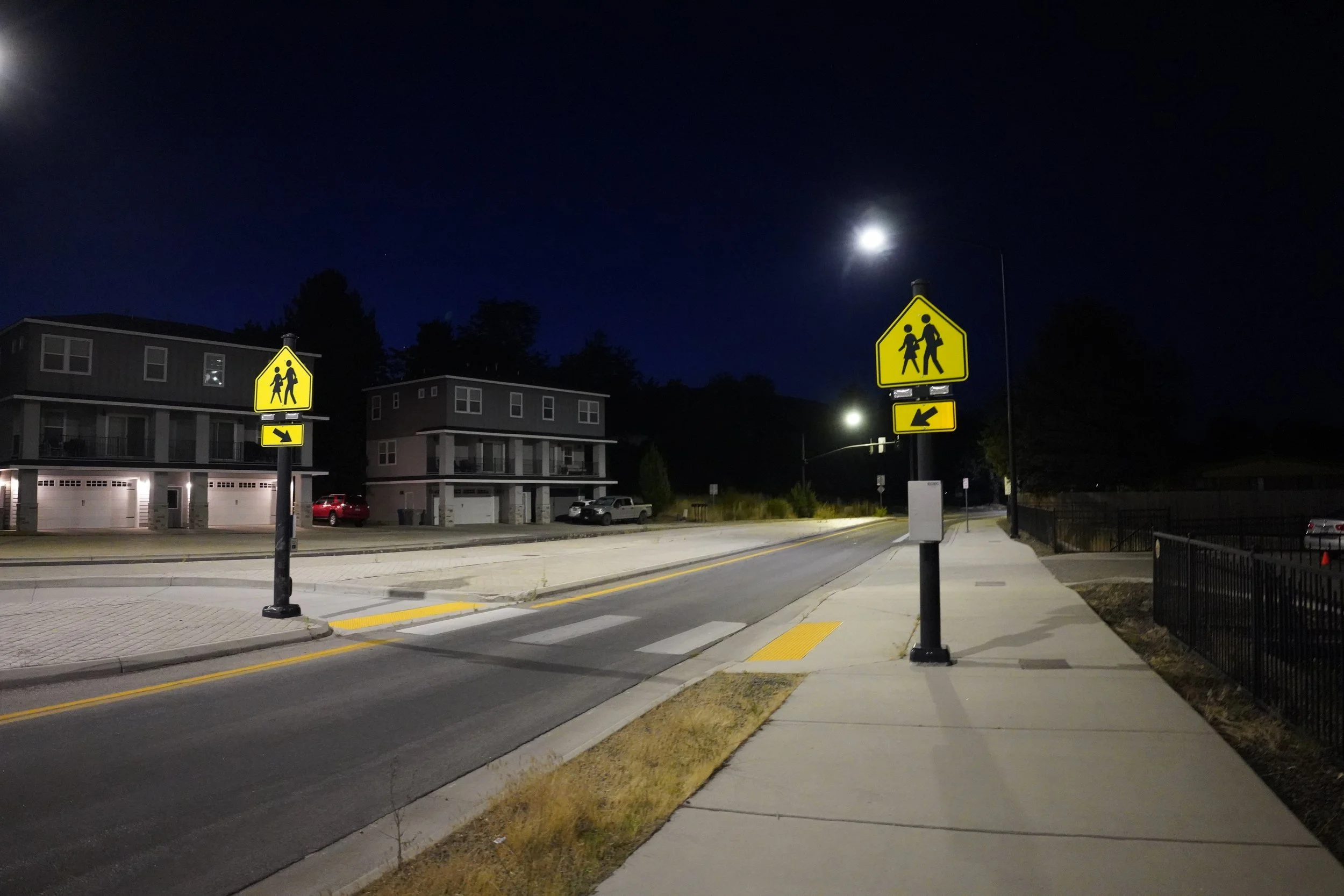
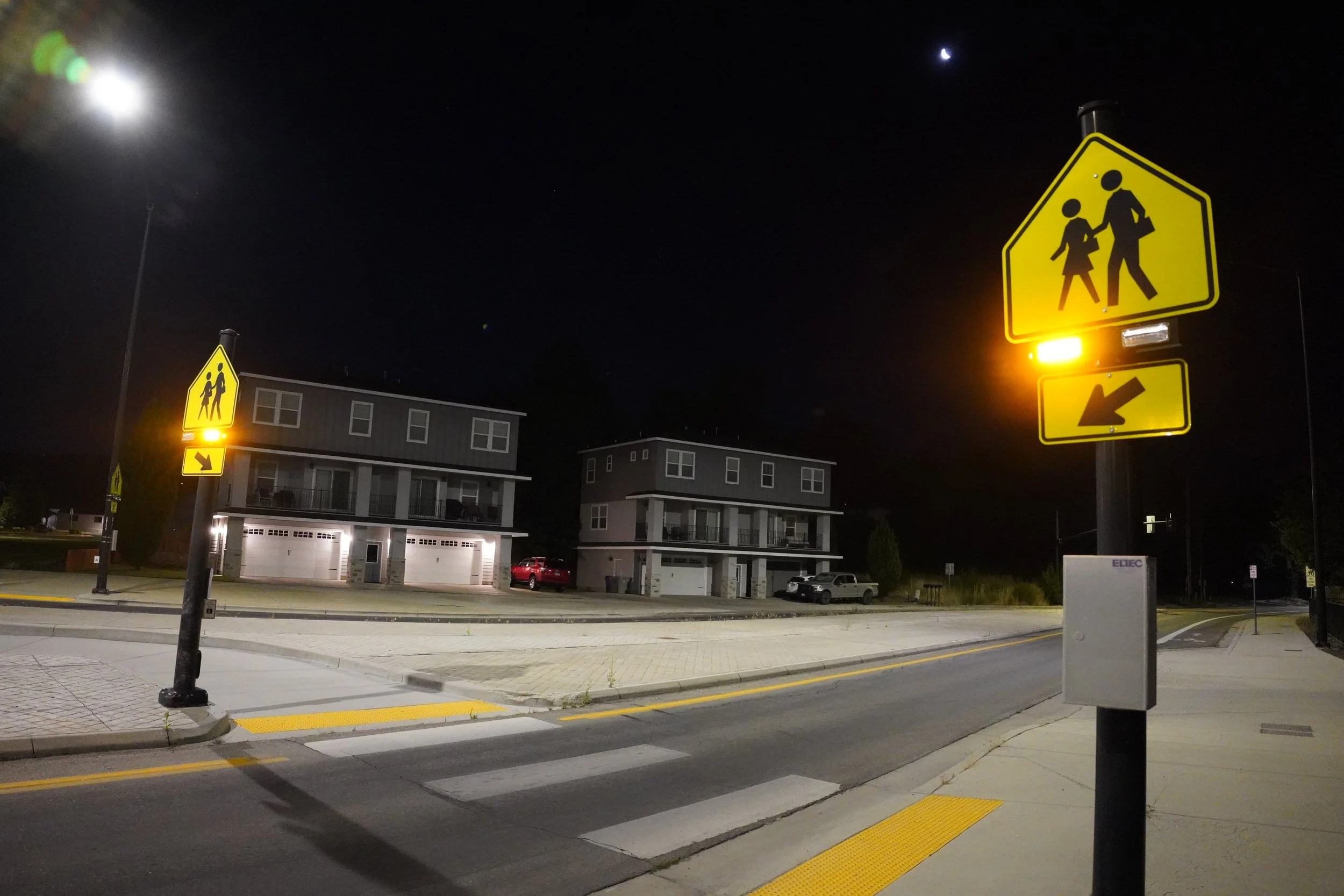
Although located near the Boise foothills, the roundabout supported noticeable multimodal activity after dark. The use of RRFB treatments at every crosswalk helps amplify the attention to the presence of a pedestrian. The only small concern for RRFB’s is the flashing lights, though brief, tend to be a little bit of an issue when flashing into nearby residents windows.
Observed users included:
runner
bicyclist
electric scooter rider
Considering the surrounding school, apartments, and open space, the intersection felt comfortable and inviting.
Several characteristics contributed to this impression:
continuous lighting
open sight lines
clearly defined sidewalks
visible crossings
active users
The lighting encouraged a sense of security without feeling excessively bright.
Human Factors Observation
One of the more interesting findings from the field visit involved driver recognition.
Although vertical illuminance levels were relatively modest, approaching motorists consistently appeared to recognize pedestrians well before reaching the crossings.
This suggests that visibility was being influenced by more than measured light levels alone.
Several factors likely contributed:
contrast between the illuminated roundabout and darker approach corridors
slower vehicle speeds
simplified driver workload within the roundabout
consistent lighting across the intersection
This reinforces an important principle of nighttime design:
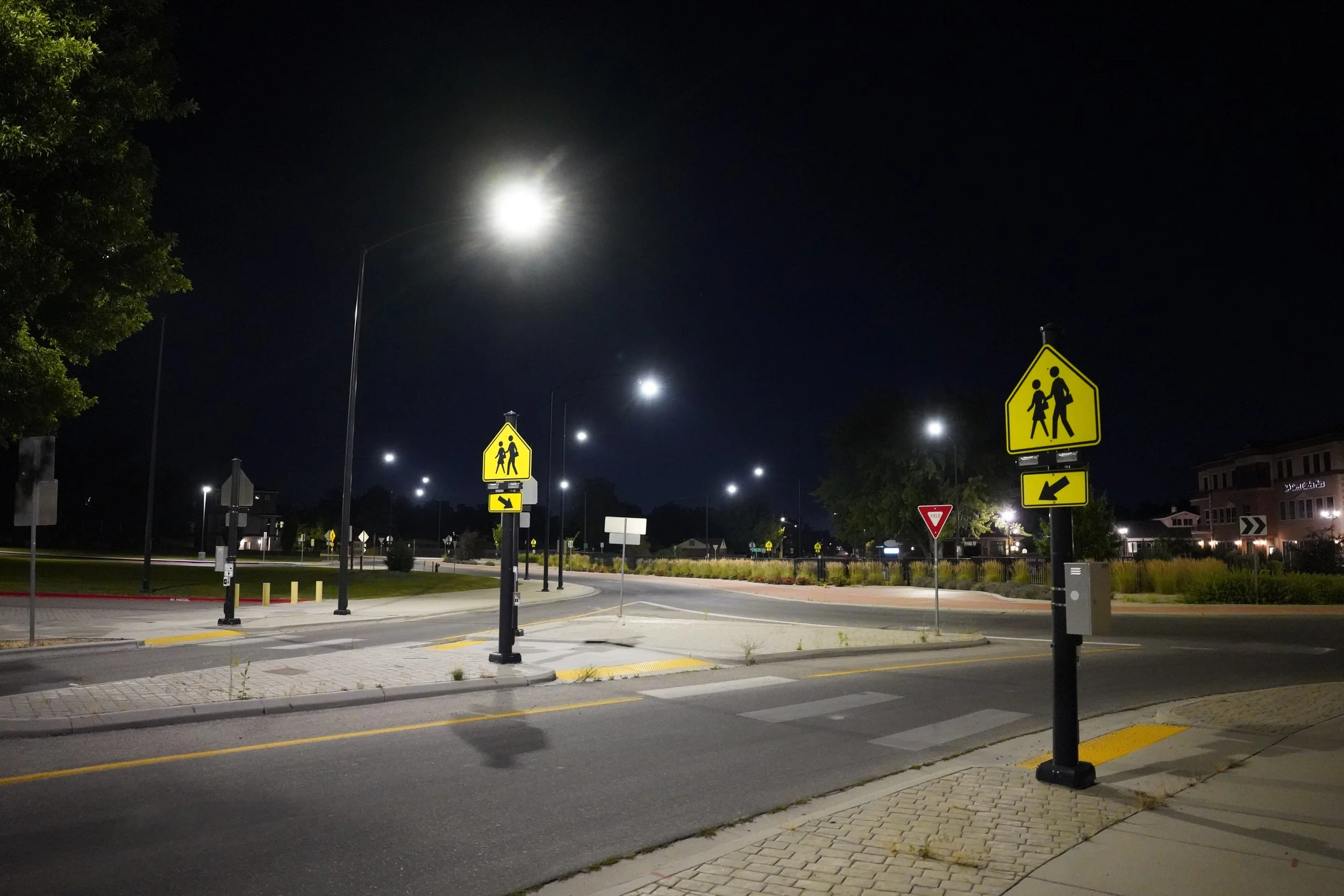
Pedestrian visibility is influenced not only by illuminance, but also by visual contrast, driver expectancy, adaptation, and the overall organization of the nighttime environment.
Lighting Transition Beyond the Roundabout
One noticeable characteristic was how quickly lighting conditions changed after leaving the intersection.
Outside the influence of the roundabout:
roadway illumination decreased noticeably
uphill segments became substantially darker
pedestrian comfort varied depending on the route
The roundabout functions almost as an illuminated island within an otherwise darker roadway network.
This creates a strong visual gateway while also highlighting opportunities to improve continuity along adjacent corridors.
Gateway Effect
The brighter intersection creates a natural visual gateway.
Approaching drivers receive several subconscious cues:
roadway conditions are changing
speeds should decrease
additional decisions are required
pedestrians may be present
Lighting supports driver expectancy before any traffic control devices are consciously processed.
Limited Light Trespass
Another notable characteristic is the apparent control of light spill.
The surrounding residential areas remain relatively dark while illumination remains concentrated where drivers and pedestrians need it most.
This balance improves nighttime character without sacrificing safety.
Overall Takeaway
This dogbone roundabout demonstrates that successful roadway lighting is about far more than meeting numerical lighting criteria. Through balanced fixture placement, consistent illumination, controlled contrast, and a deliberate visual hierarchy, the design creates an intersection that is intuitive to navigate and comfortable for all users after dark. While measured horizontal and vertical illuminance levels were relatively modest, the intersection remained highly recognizable from every approach, pedestrians were visible, and the lighting reinforced the roadway geometry without unnecessary brightness. It serves as an excellent example that effective transportation lighting is achieved through thoughtful design—not simply more light.