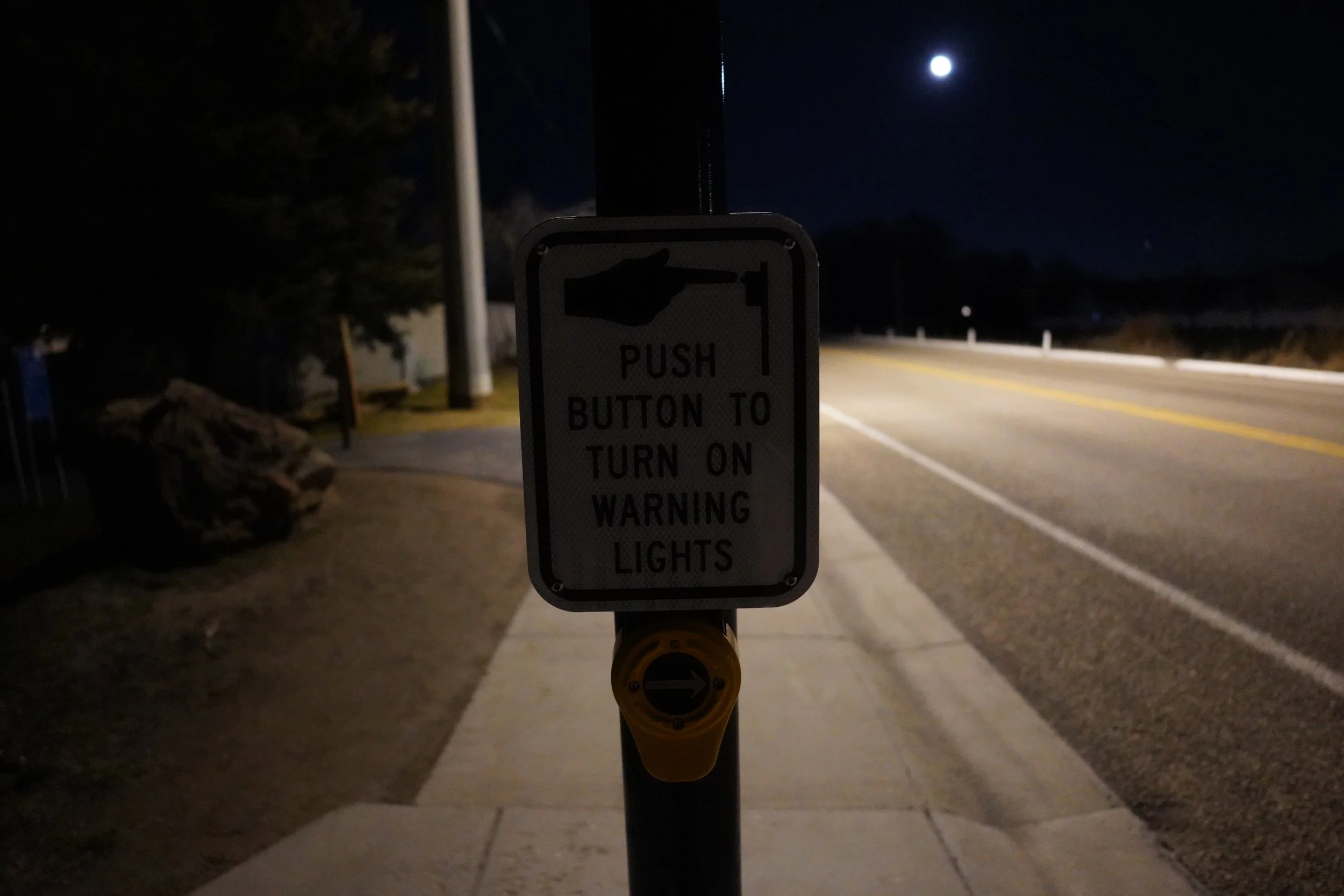
Why Roadway Lighting Belongs in Transportation Engineering
Exploring Roadway Lighting through the lens of Transportation Engineering Objectives.
(Audio commentary from Author available below)
Article date: June 16th, 2026
After visiting numerous intersections at night ranging from signalized intersections to uncontrolled crossings, a recurring theme began to emerge in my mind:
Drivers consistently responded most to situations where a pedestrian (in this case, myself) was most visible.
That observation led to a question that I think transportation professionals should consider:
Are we designing our transportation systems to function more effectively during the day than at night?
Roadway lighting directly contributes to many of the outcomes transportation engineers strive to achieve every day, yet it often receives less attention than other transportation design elements despite its influence on nighttime system performance.
The value of roadway lighting is rarely disputed. The real question is not whether lighting matters, but how it should be integrated into the transportation engineering process.
Before exploring that question further, it is important to establish a foundational premise:
Transportation systems depend on visibility after dark. Roadway lighting is the infrastructure that provides it.
The case for roadway lighting taking its rightful place is evaluated against the traditional objectives of transportation engineering.
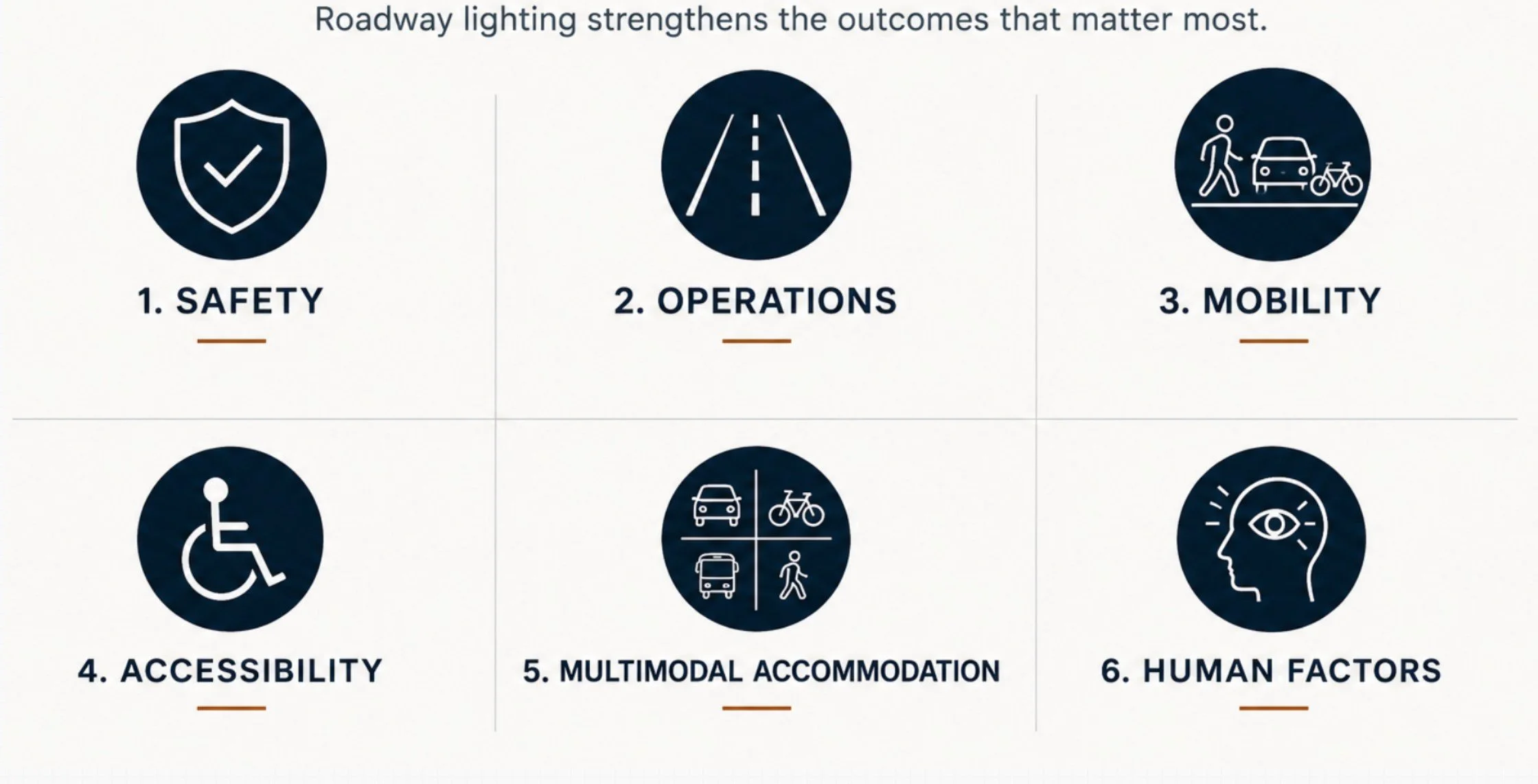
OBJECTIVE #1: SAFETY
If safety is the primary objective of transportation engineering, then visibility after dark deserves far more attention than it currently receives. At night, every transportation user relies on visibility to detect hazards, and unlike daytime environments where sunlight provides consistent visual information, nighttime transportation systems operate within the constraints of human vision and artificial illumination.
OBJECTIVE #2: OPERATIONS
Research Highlight:
Approximately 76% of pedestrian fatalities occur during nighttime conditions despite significantly lower pedestrian activity compared to daytime hours¹. This disproportionate risk highlights the critical role visibility plays in pedestrian safety and reinforces the importance of roadway lighting as a transportation safety countermeasure.
By improving visibility, roadway lighting influences detection, recognition, decision-making, and reaction time. These effects are particularly important at transportation conflict points such as intersections, crossings, merging areas, and driveways, where users must identify, interpret, and respond to potential hazards.
A critical distinction exists between illuminating the roadway surface and revealing hazards. As we have come to realize both theoretically and through real-world applications, pavement brightness alone does not ensure adequate visibility of vulnerable road users or roadside features and hazards. Adequate lighting performance is driven by quality over quantity. Contrast, distribution, glare control, and uniformity often have a greater impact on safety outcomes than higher illumination levels.

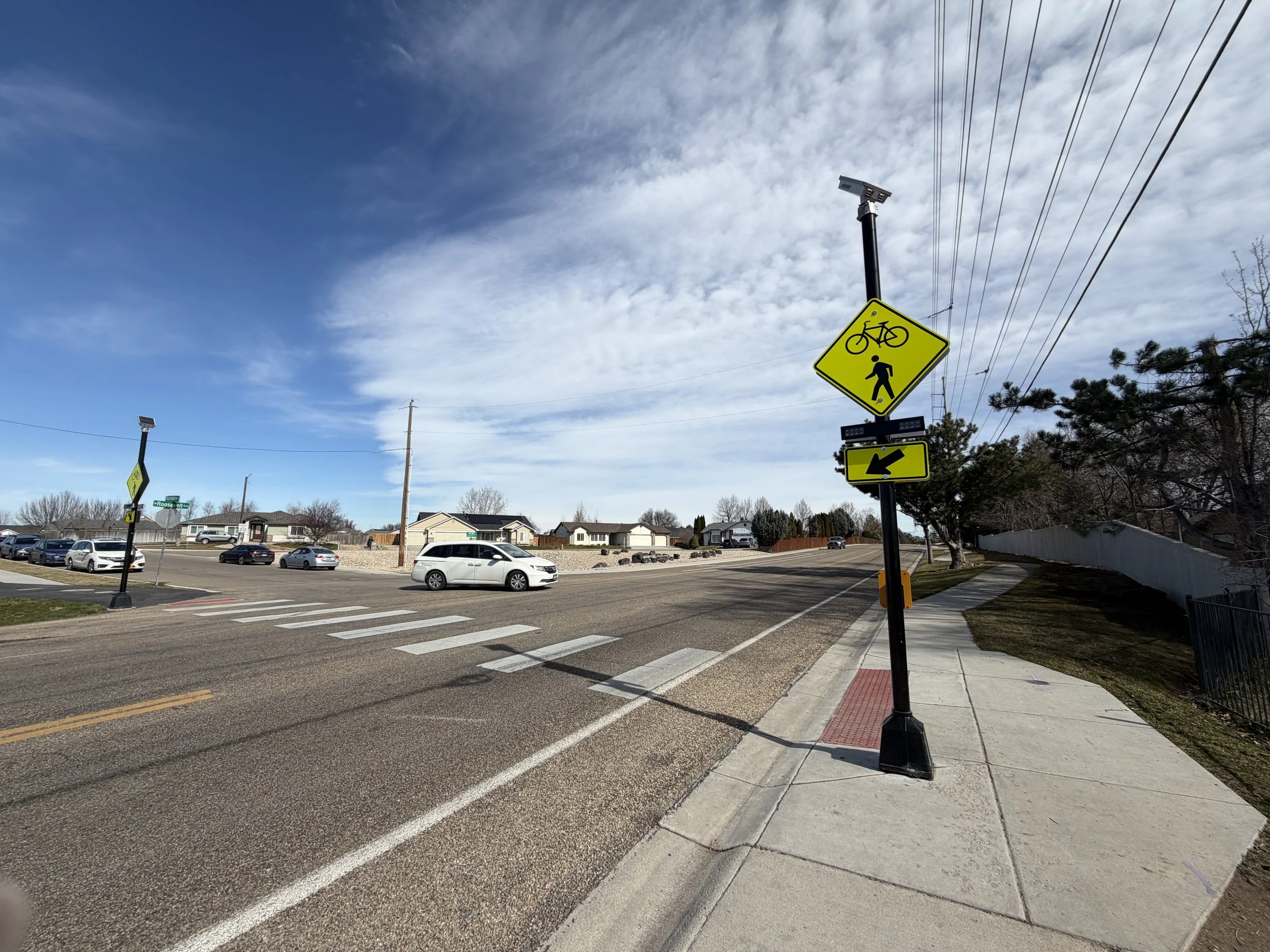
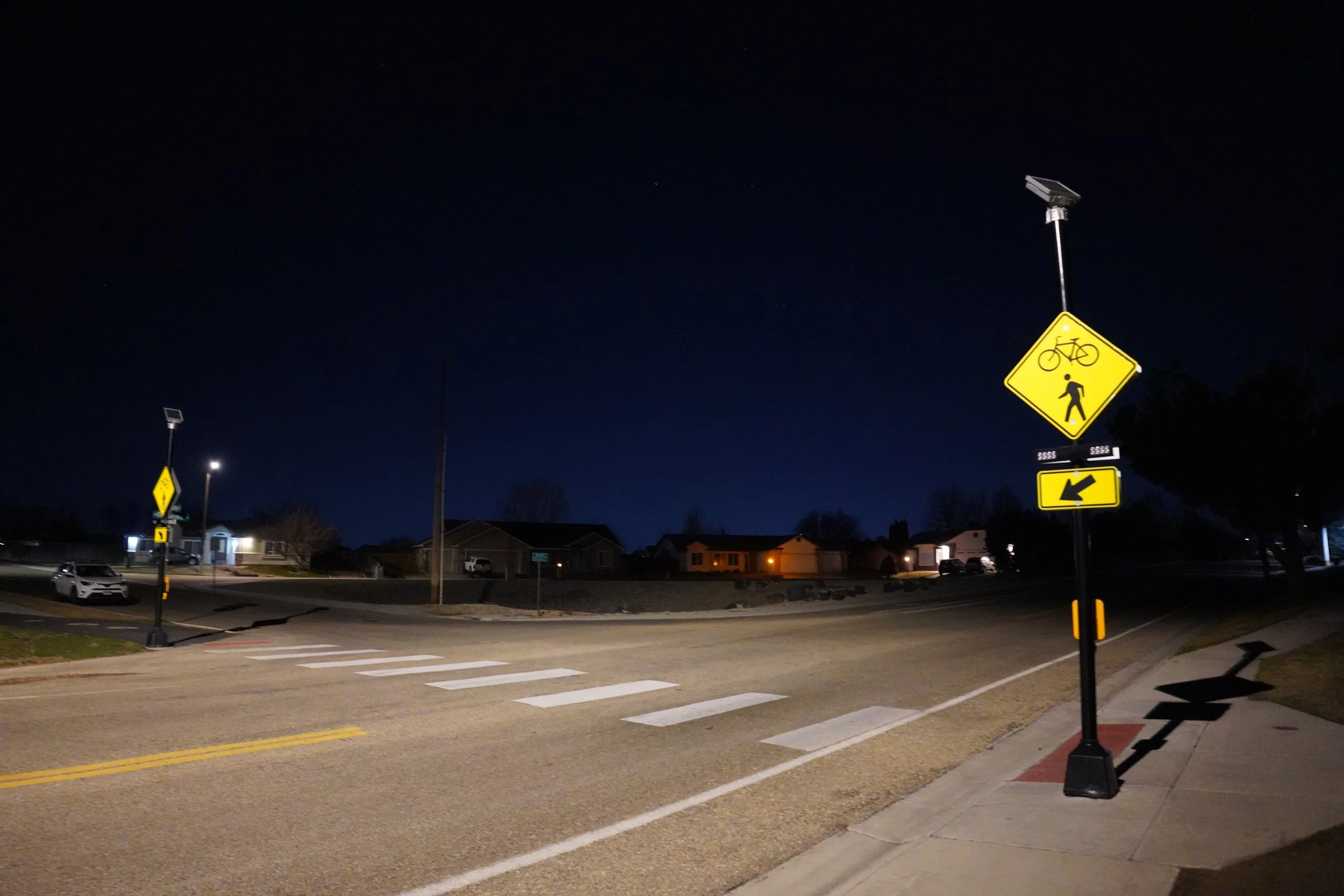
Roadway Lighting's contribution: Day vs. nighttime environment
During daylight hours, roadway users rely on natural light to identify roadway features, traffic control devices, and potential conflicts. After dark, roadway lighting assumes that role by providing the visual information necessary to recognize crosswalks, pavement markings, roadway geometry, signs, and other critical transportation elements. Effective lighting helps maintain the functionality of the transportation system when natural light is no longer available.
If operations are measured by how effectively users move through a transportation network, then visibility must be recognized as a critical operational component.
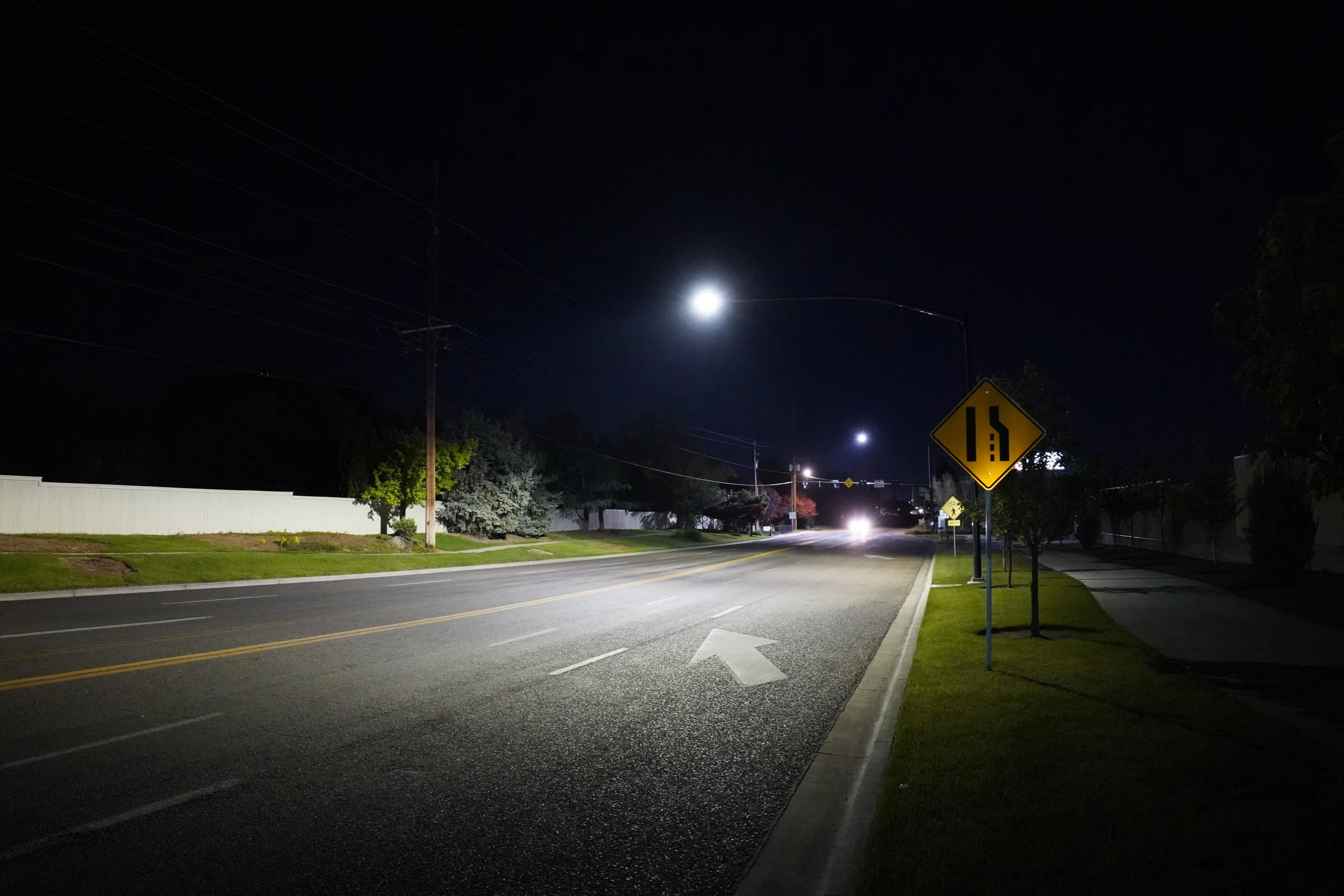
Merge lane intentionally illuminated for operational clarity
To illuminate a feature on the roadway at night, there is no question that roadway lighting is needed. However, there is a method to the madness. The goal is not simply to place light on the roadway, but to place light where it helps communicate important information to the roadway user. The example above shows a merge lane that is intentionally illuminated so the required lane shift becomes more obvious to approaching drivers. That information, revealed through intentional light placement, allows the roadway user to recognize the condition and adjust accordingly before a potential conflict is realized.
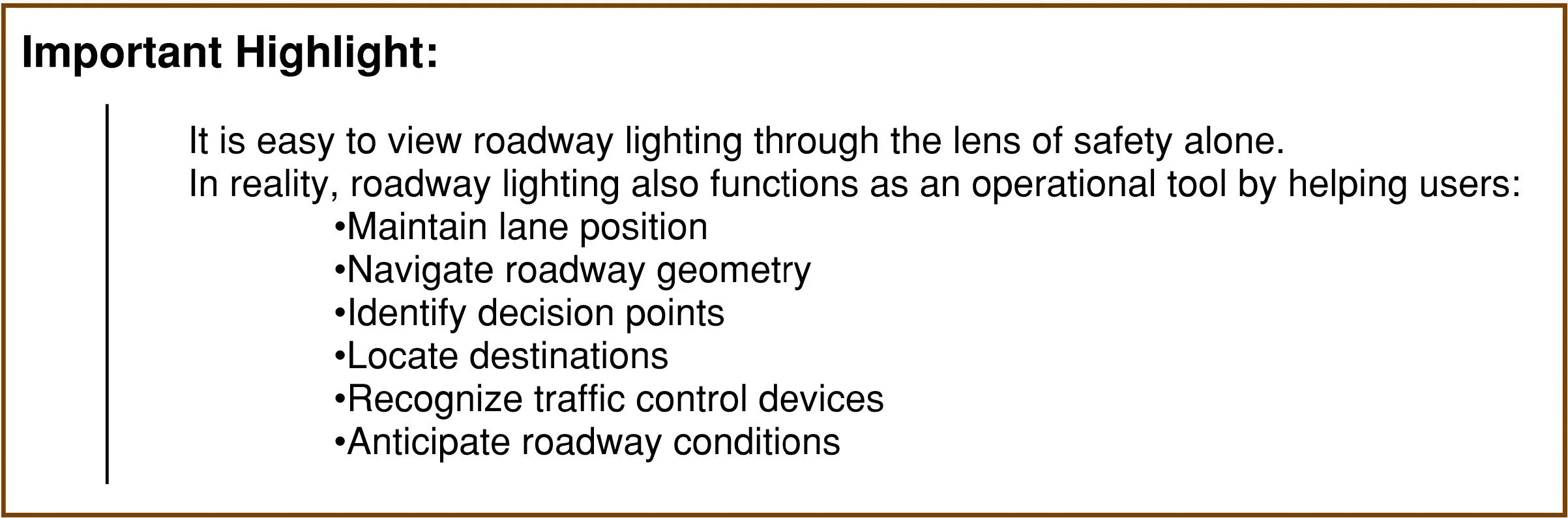
Operations can mean different things, but at its core, it reflects the design intent that transportation engineers thoughtfully incorporate into a facility to support safe and efficient movement. Transportation engineers routinely use tools such as signal indications, signing, pavement markings, and channelization to communicate information and influence roadway user behavior. Roadway lighting should be viewed in a similar manner. The objective is not simply to illuminate the roadway, but to intentionally reveal the features that are most important to the operation of the transportation system. Curves, grade changes, merge areas, lane transitions, bridges, decision points, and other critical roadway features can all be emphasized through thoughtful lighting design.
Roadway lighting can be used to communicate roadway conditions and guide user expectations after dark. The need for operational clarity increases at night as natural visibility decreases. As a result, the opportunity for roadway lighting to support transportation operations increases as well.
OBJECTIVE #3: MOBILITY
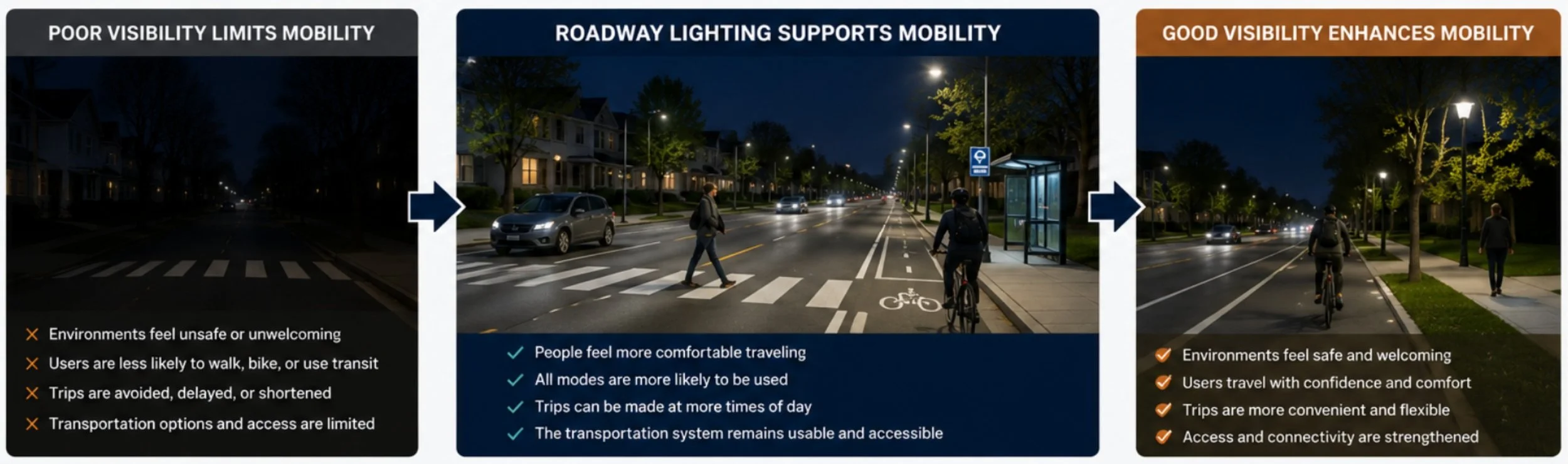
If mobility is measured by how effectively people and goods move throughout a transportation network, then visibility must be recognized as a key contributor to user confidence and system usability.
Trail crossing intentionally illuminated to encourage mobility after dark
At night, mobility is influenced not only by physical infrastructure, but also by a user's perception of the environment. Roadways, sidewalks, shared-use paths, transit facilities, and crossing locations that provide adequate visibility are generally perceived as more comfortable, predictable, and usable. Conversely, environments with poor visibility often discourage travel, reduce user confidence, and limit the practical use of transportation facilities after dark. The trail crossing above is an example of an environment intentionally illuminated to encourage mobility for all modes even after dark.
Roadway lighting supports mobility by helping users feel comfortable navigating the transportation system, regardless of mode. By improving visibility and reducing uncertainty, lighting encourages continued movement throughout the network and helps transportation facilities remain functional beyond daylight hours.

OBJECTIVE #4: ACCESSIBILITY
If accessibility is measured by how effectively all users can access and utilize transportation facilities, then visibility must be recognized as an important component of an accessible transportation environment.
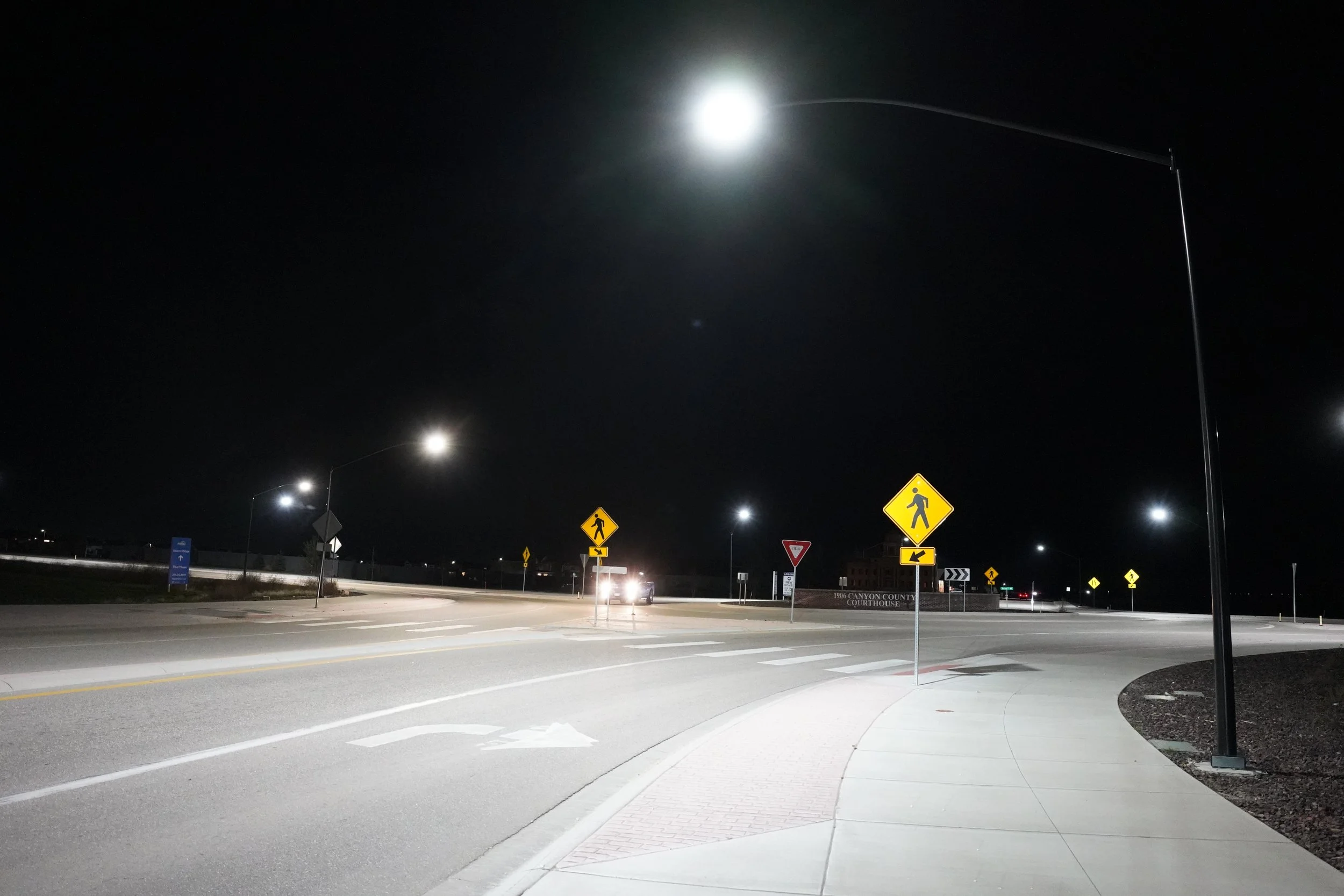
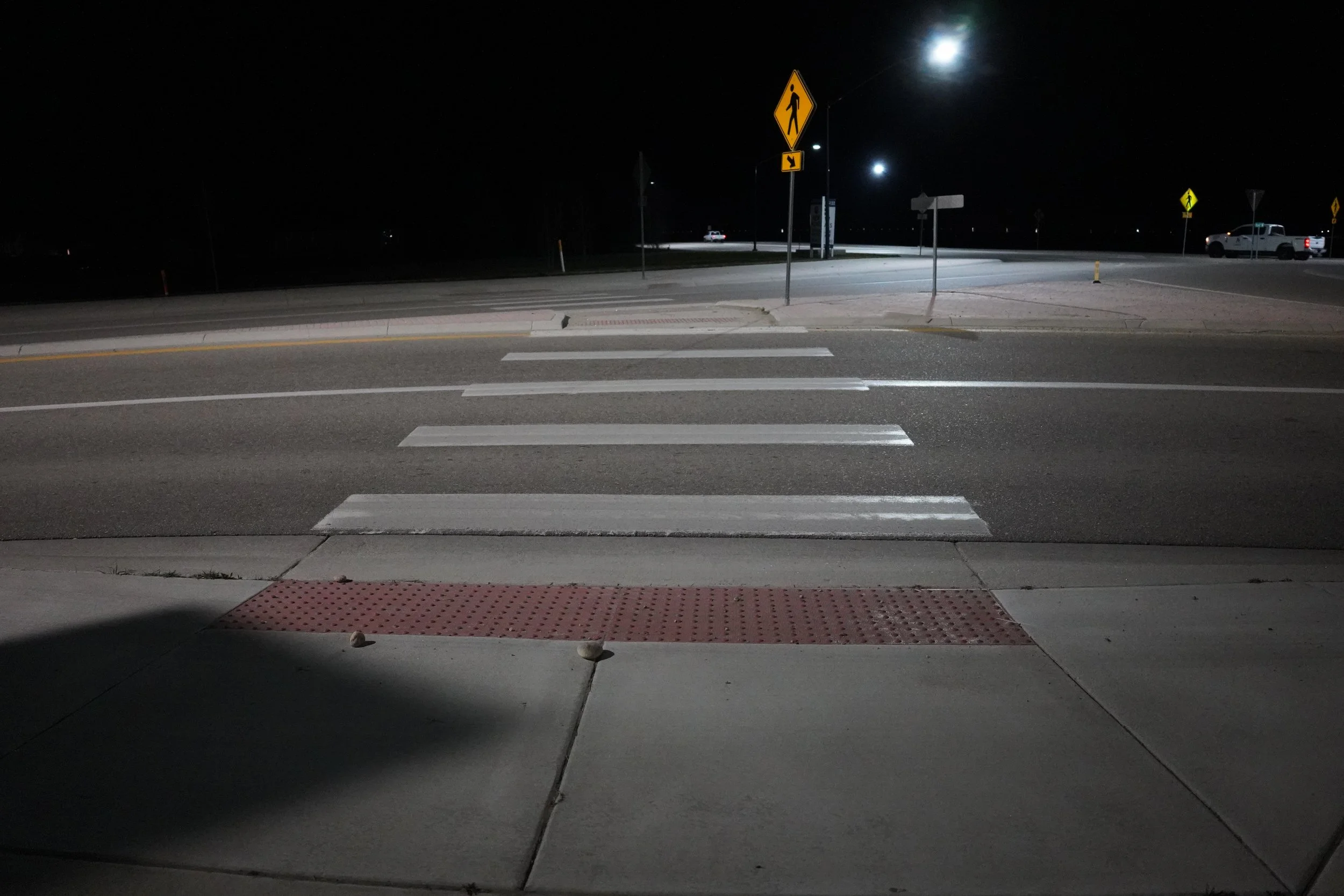
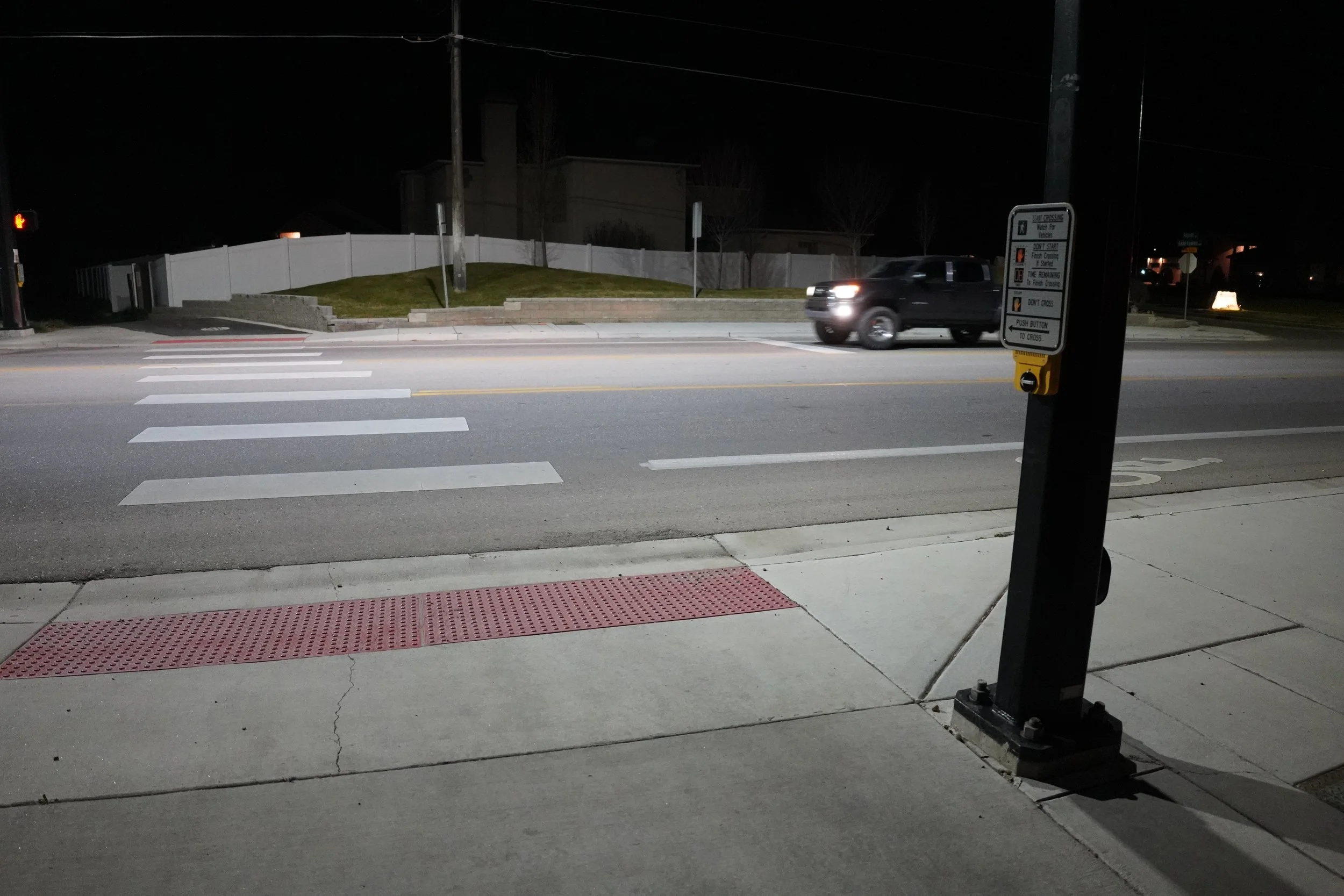
Accessibility for all means designing transportation facilities that can be safely and effectively used by the widest possible range of users, particularly those who may be disadvantaged by physical, visual, or mobility limitations. The image to the right demonstrates how roadway lighting can support accessibility by intentionally revealing important transportation features after dark. Changes in grade, curb ramps, sidewalk connections, and crossing locations become easier to identify, helping users understand where to travel and how to safely navigate the environment. By improving the visibility of these features, roadway lighting helps reduce uncertainty and supports the ability of all users to safely and confidently move through the transportation system at night. The image above to the right demonstrates the need for lighting to also reveal unexpected obstacles that may be present. In this case, a few rocks seem to have made their way onto the ramp.
Roadway lighting supports accessibility by improving the visibility of transportation facilities, helping users identify pathways, transitions, destinations, and potential obstacles. By reducing visual barriers and improving environmental awareness, lighting helps ensure that transportation facilities remain usable and understandable after dark.

OBJECTIVE #5: MULTIMODAL ACCOMMODATION
If multimodal accommodation is measured by how effectively a transportation system serves and balances the needs of different users, then visibility must be recognized as a critical component of multimodal design.
Modern transportation systems are expected to accommodate motorists, pedestrians, bicyclists, transit users, micromobility users, and other vulnerable roadway users. These users often interact at shared conflict points such as intersections, crosswalks, transit stops, shared-use paths, and driveway crossings, where successful operation depends upon their ability to detect and recognize one another.
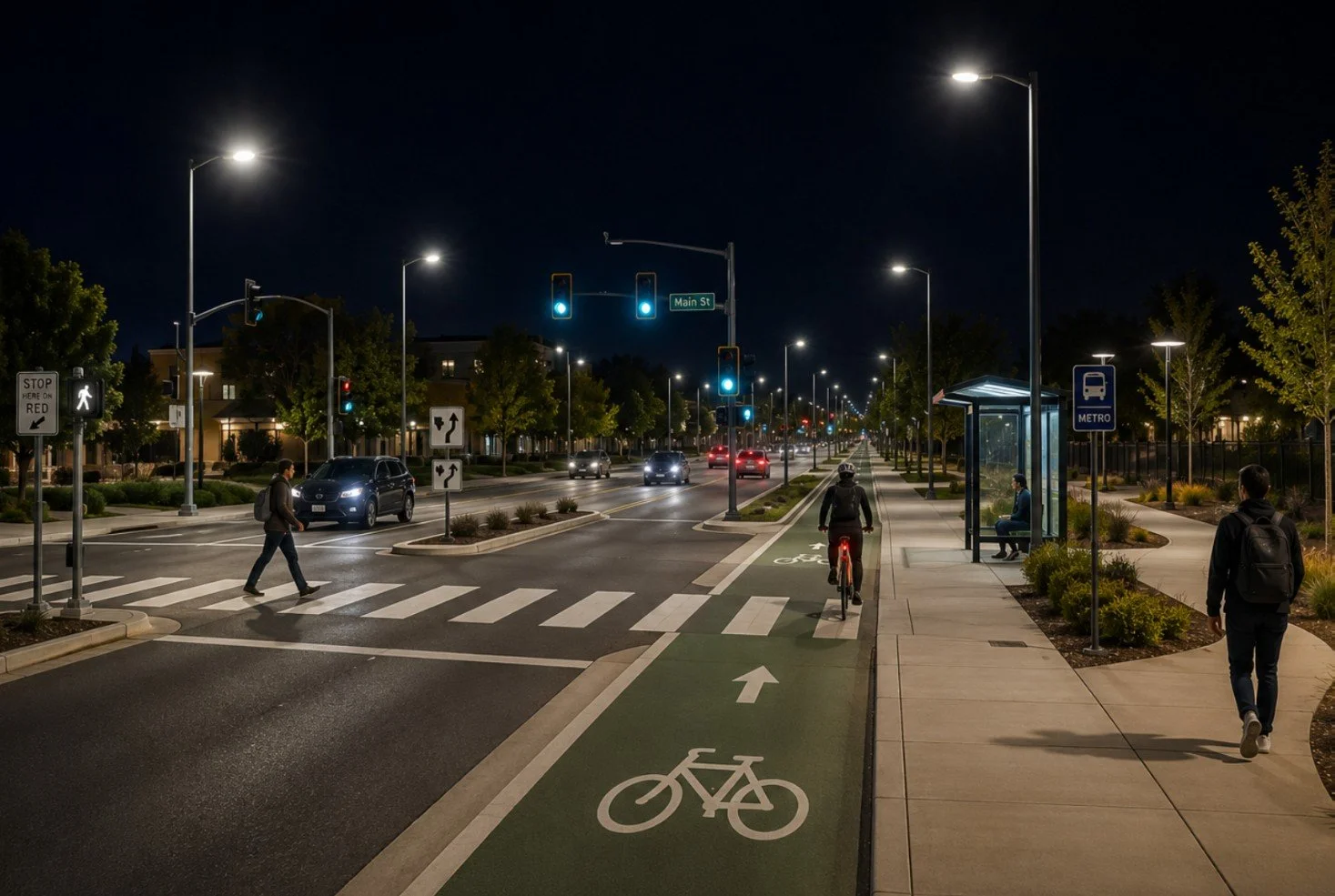
At night, these interactions become heavily dependent upon artificial illumination. Roadway lighting supports multimodal accommodation by improving the visibility of users, reducing uncertainty, and helping individuals recognize potential conflicts earlier. By increasing the ability of roadway users to see and be seen, lighting contributes to safer and more predictable interactions among all transportation modes.

As communities continue investing in multimodal infrastructure, visibility becomes an increasingly important consideration in ensuring that transportation facilities remain functional and effective after dark.
OBJECTIVE #6: HUMAN FACTORS
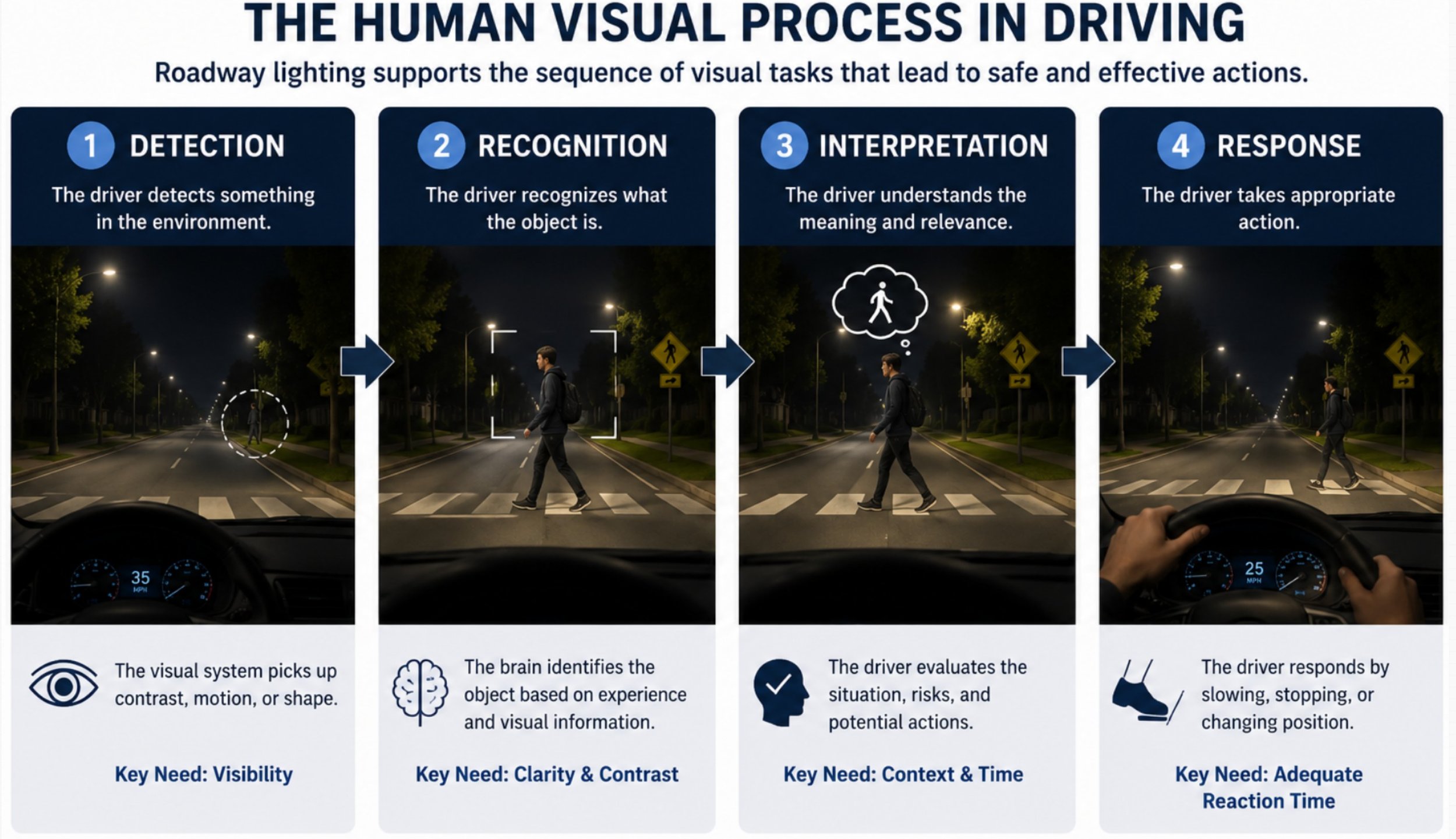
If transportation engineering is fundamentally concerned with how people interact with the transportation environment, then human factors must be recognized as a central consideration in visibility-after-dark application. While the preceding objectives focus on system performance and user outcomes, the human factors objective focuses on the individual user and the visual processes that influence perception, recognition, decision-making, and response.
Roadway lighting directly influences how users perceive the transportation environment. By improving visibility, contrast, visual comfort, and recognition distance, lighting supports the cognitive processes necessary for safe and effective transportation decisions. Users who can more easily identify roadway features, recognize potential conflicts, and understand their surroundings are better equipped to respond appropriately to changing conditions.
Detection occurs when a roadway user first becomes aware of the presence of an object, person, movement, or condition within the transportation environment. At this stage, the user may not yet understand what the object is, but they recognize that something requires attention.
Recognition occurs when the detected object is correctly identified. For example, a driver may detect an object ahead and subsequently recognize it as a pedestrian, bicyclist, stopped vehicle, work zone device, or roadside hazard.
Interpretation is the process of understanding the significance of the information that has been recognized. A roadway user must determine what the object means and whether it represents a potential conflict or hazard.
Response is the physical action taken following a decision. Examples include applying the brakes, yielding to a pedestrian, steering away from a hazard, reducing speed, or changing position within the roadway.
The transportation safety outcome represents the cumulative result of the human factors process. When roadway users are able to see, detect, recognize, interpret, decide, and respond effectively, the likelihood of crashes, injuries, and fatalities is reduced. This is why roadway lighting fits so well with Safe System priorities.
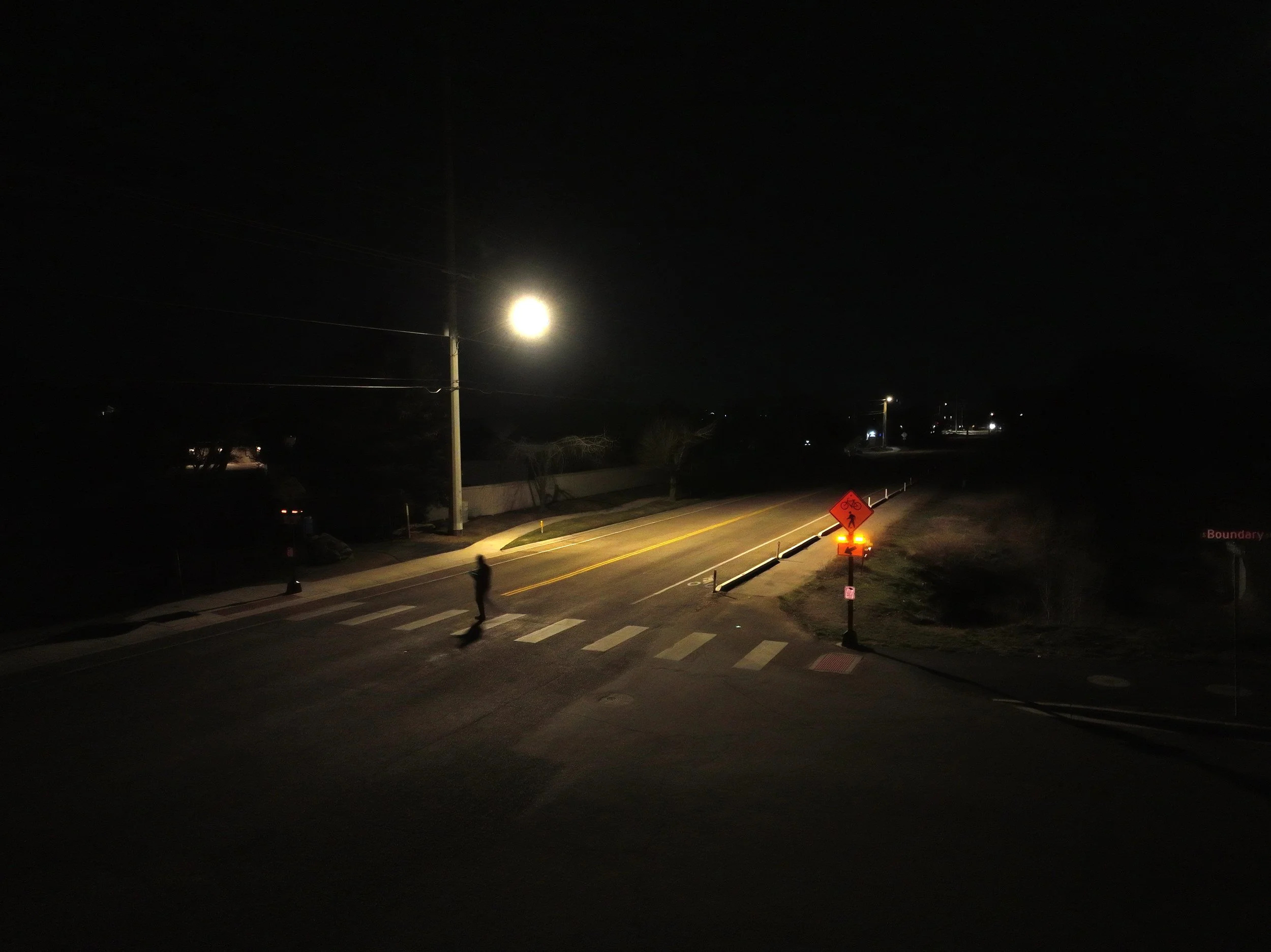
Visibility of the pedestrian at this angle is silhouetted
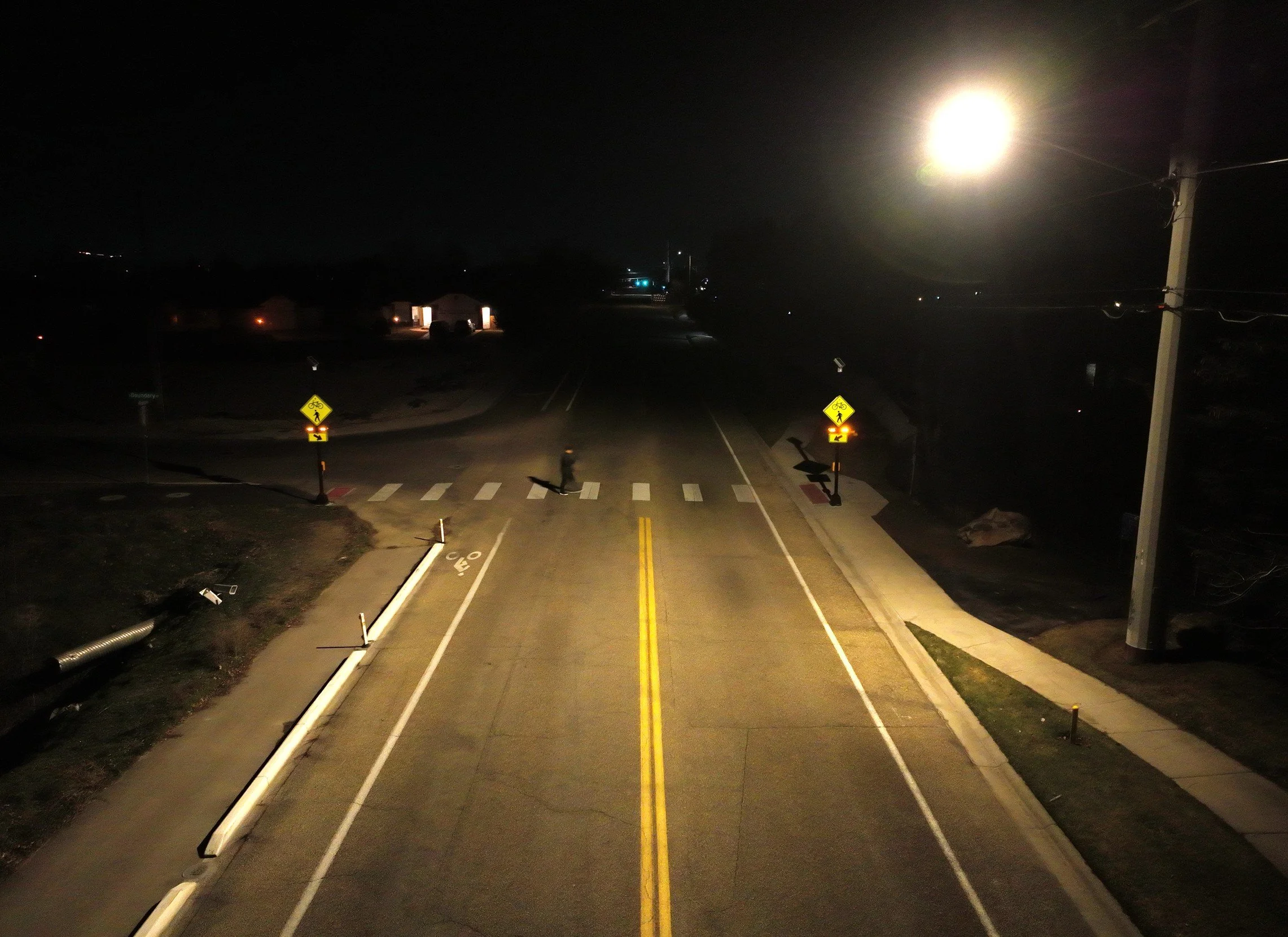
At this angle the pedestrian is a little more recognizable due to lighting
To effectively consider human factors, the pedestrian should be the most visible element within the crossing environment. While the RRFB flashing indication (above) and associated signage provide important information, they exist to draw attention to the presence of a pedestrian. Just as during daytime conditions, if the pedestrian is not readily visible, drivers may perceive the crossing as unoccupied and continue through the area. Effective pedestrian lighting therefore supports the driver's ability to detect, recognize, interpret, and respond to the presence of a pedestrian. The signage helps with attention, but the recognition of the presence of the pedestrian is what ultimately causes the yielding.
Human factors remind us that transportation engineering is not solely about roads, signals, signs, or lighting. It is about the people who use them every day. Every transportation objective ultimately relies upon human perception and decision-making, making visibility one of the most important connections between transportation infrastructure and user performance after dark.
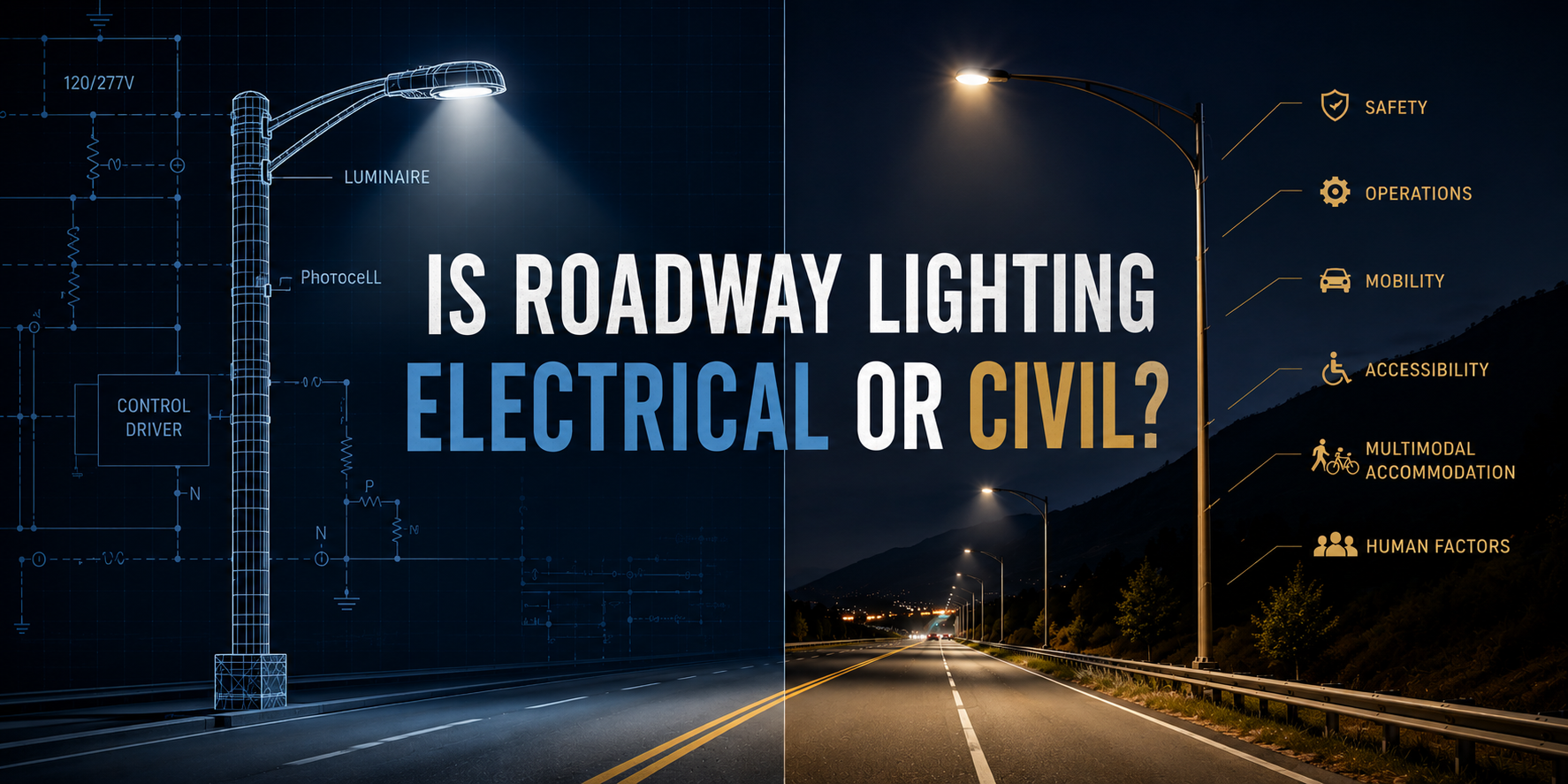
After examining roadway lighting through the lens of transportation engineering objectives, the answer becomes increasingly clear. Roadway lighting relies on power distribution, controls, circuitry, and electrical infrastructure to function. However, its purpose extends far beyond the delivery of power and light. As we discovered above, roadway lighting directly supports transportation safety, operations, mobility, accessibility, multimodal accommodation, and human factors. These are not electrical objectives; they are transportation objectives.
This distinction is important because transportation engineers are ultimately responsible for how roadway users interact with the transportation environment. Just as traffic signals and intelligent transportation systems have become integrated components of transportation engineering practice, roadway lighting should be viewed through the same lens. The question, therefore, may not be whether roadway lighting is electrical or civil. The better question may be:
What transportation objective does roadway lighting not support?
Roadway lighting is unquestionably a transportation engineering tool that helps users see, understand, navigate, and safely interact with the transportation system after dark.
Visibility is not an electrical outcome.
Visibility is a transportation outcome.
Roadway lighting is the transportation engineering tool that delivers it after dark.
Now, help me officially welcome roadway lighting to transportation engineering.
References / Citations
¹ FHWA / NHTSA pedestrian safety data.
Author’s Note:
The perspectives presented in this article are based on the author's professional experience in transportation engineering, roadway lighting design, and field observations of transportation facilities. The article is intended to encourage discussion regarding the role of roadway lighting within transportation engineering practice.
Join the Conversation!
Transportation Lighting Insights was created to encourage discussion around visibility, roadway lighting, and the role in transportation engineering. Comments, alternative perspectives, field observations, and constructive feedback are welcomed and encouraged.